


































Current AI trends in the transportation and logistics industry
Artificial Intelligence (AI) is reshaping the transportation and logistics industry through major trends such as autonomous vehicles, fleet optimization, smart warehouses, predictive analytics, and process automation. Companies adopting AI gain faster operations, lower costs, and stronger competitiveness.
Artificial intelligence is revolutionizing how goods move and are stored worldwide. Companies are deploying AI at every stage of the supply chain – from self-driving vehicles on highways to smart warehouses – to cut costs, boost efficiency and build resilience. Global reports note that investments in data analytics, AI, robotics and automation are now essential for a modern supply chain. In fact, nearly all transportation executives surveyed believe AI will transform their industry, though most expect this to play out over the next few years.
- 1. Key AI Trends Reshaping Logistics
- 2. Autonomous Freight and Delivery
- 3. AI-Powered Routing and Fleet Optimization
- 4. Smart Warehousing and Robotics
- 5. Predictive Analytics and Planning
- 6. Generative AI and Automation Tools
- 7. Port and Maritime Intelligence
- 8. Making AI Accessible Across the Industry
- 9. The Path Forward
Key AI Trends Reshaping Logistics
Autonomous Freight
Smart Routing
Smart Warehousing
Predictive Analytics
Generative AI
Port Intelligence
Autonomous Freight and Delivery
Driverless trucks and delivery drones are moving from concept to reality, with major companies leading the charge:
- Long-haul autonomous trucks: DHL and Volvo have begun piloting long-haul autonomous trucks (with safety drivers on board) in Texas, aiming for 24/7 operation that "lowers costs, increases efficiency and enhances safety"
- Drone delivery expansion: Retailers like Walmart are rapidly expanding drone deliveries for last-mile logistics – Walmart just grew its drone service to 1.8 million homes in Texas
- FAA approvals: Companies like DroneUp have received FAA approval for beyond-visual-line-of-sight flights to scale up autonomous delivery

AI-Powered Routing and Fleet Optimization
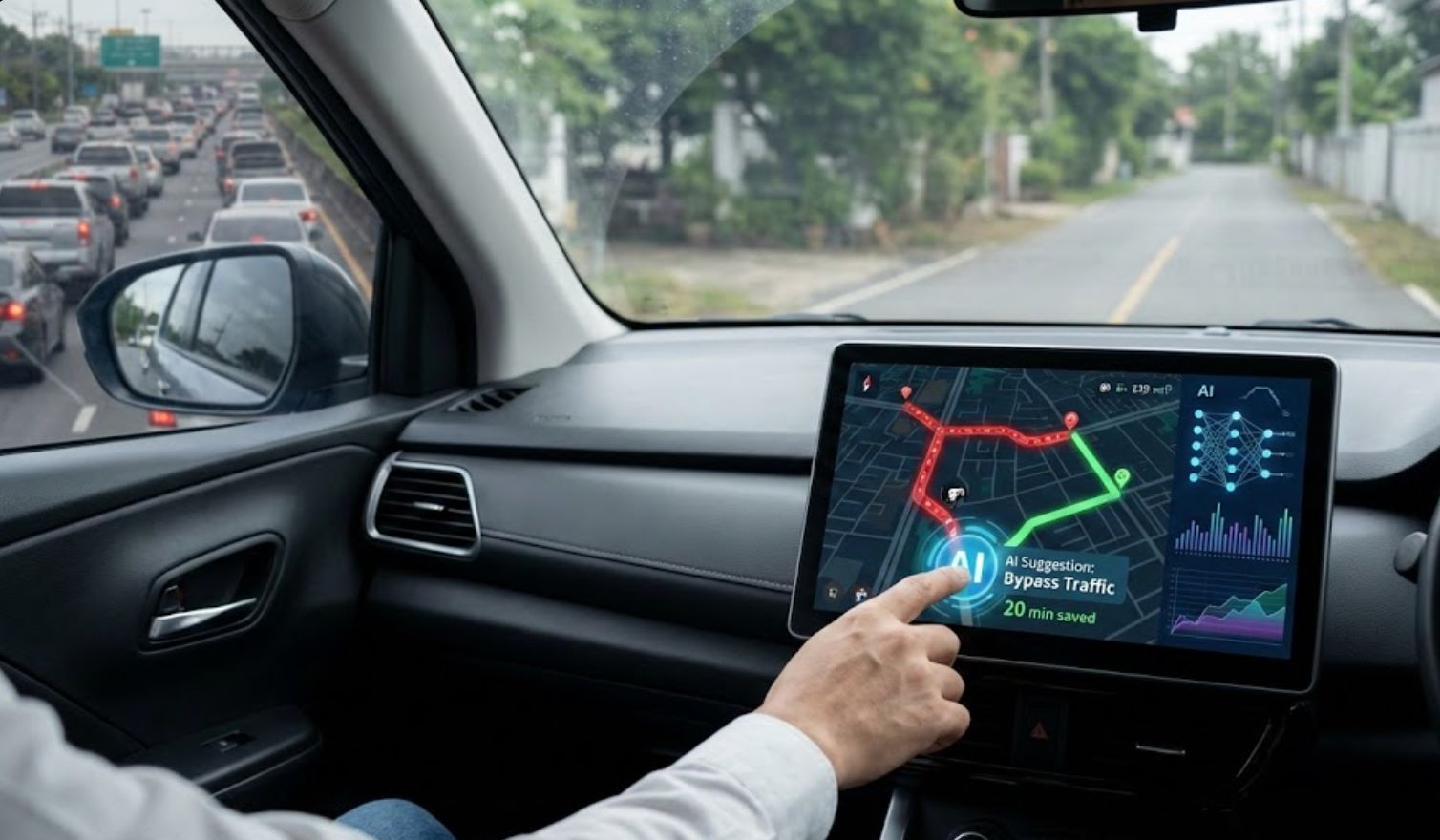
Smart route planning and fleet optimization are delivering measurable savings across the industry. AI algorithms ingest real-time traffic, weather and demand data to find the fastest, most fuel-efficient routes.
Fuel Efficiency
40% of fleets using AI saw at least a 50% improvement in fuel usage or cost
Empty Miles Reduction
Cut empty backhaul miles (estimated 15% of truck miles are driven empty)
Time Savings
Drivers spend more time on the road and less on paperwork with AI dispatch

Machine learning is also built into fleet management software to match loads with the best carriers and to schedule trucks dynamically. Over time, AI-driven dispatch and control towers are becoming standard, boosting utilization and ensuring optimal resource allocation.
Smart Warehousing and Robotics
Warehouses are becoming highly automated with AI-powered robots and computer vision systems that work alongside human teams:
Autonomous Mobile Robots
Autonomous mobile robots now handle pallet movement and picking in many facilities, storing and retrieving inventory faster and with fewer errors than humans. Computer vision cameras track inventory in real time – scanning barcodes, dimensions and quantities without manual scanning – which keeps stock levels accurate and operations flowing.
Quality Control
AI systems perform quality control by spotting damaged goods or incorrect labeling before shipments go out, ensuring only perfect orders reach customers.
Floor Optimization
AI in warehouses optimizes picking paths and floor layouts, balances traffic (forklifts and workers), and even monitors equipment wear to schedule maintenance before breakdowns occur.

Predictive Analytics and Planning
Beyond on-the-ground automation, AI is transforming supply chain decision-making through advanced machine learning models that forecast, predict and proactively adjust plans:
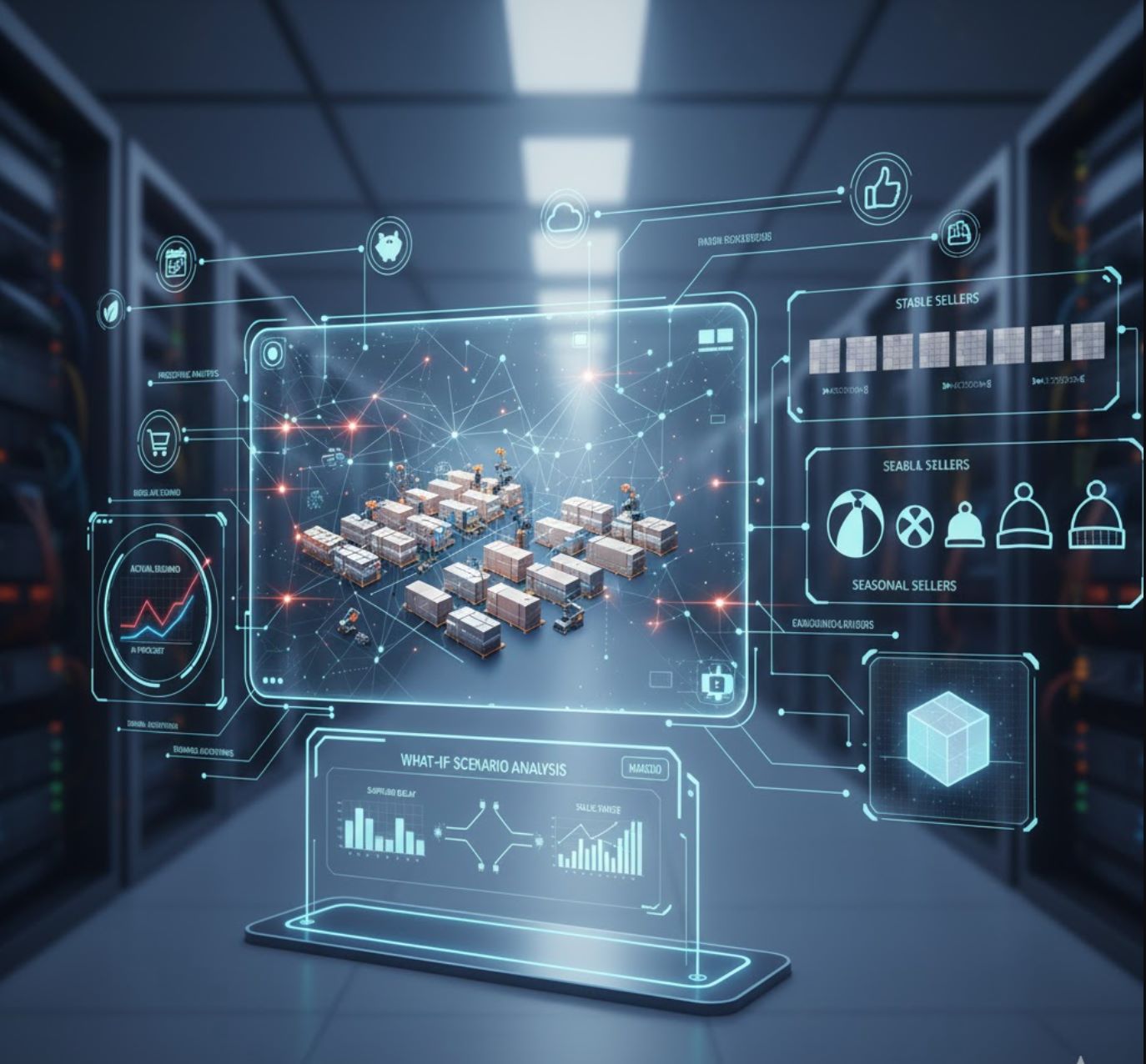
Demand Forecasting
AI-enhanced forecasting tools combine historical orders with external factors (weather, events, promotions) to predict shipment volumes and potential disruptions
Inventory Optimization
Logistics managers use these insights to optimize inventory and preempt stockouts – AI can alert when finished goods might miss delivery targets, so orders can be re-prioritized
Predictive Maintenance
Sensor data from trucks or conveyor belts is analyzed to flag parts that will fail, avoiding costly downtime and unplanned disruptions
Digital Twin Simulation
Real-time digital models of terminals predict ship berthing times and yard congestion, enabling proactive resource allocation

South Korea's Port of Busan uses an AI-driven "metaverse" to plan arrivals and fuel use, which was projected to improve punctuality by approximately 79%.
— Port Operations Case Study
Overall, predictive AI gives logistics planners a "new compass" to allocate resources and respond to shocks before they happen.
Generative AI and Automation Tools
More recently, generative AI is beginning to enter logistics with practical applications that streamline operations:
Customer Service Chatbots
Virtual assistants powered by large language models answer common queries about shipping restrictions or carrier options instantly, replacing routine phone or email interactions
Data Extraction
GenAI tools read bills of lading or invoices and extract key data (date, addresses, line items) without human data entry
Multi-Language Labels
Generate shipping labels in multiple languages automatically for international shipments
Order Summarization
AI summarizes order histories and provides quick insights for customer support teams

Port and Maritime Intelligence
AI is making ports and sea transport smarter through digitalization projects that cut congestion and delays:
Manual Port Management
- Manual scheduling of berths and cranes
- Longer vessel waiting times
- Inefficient labor allocation
- Limited visibility into operations
Intelligent Port Systems
- Unmanned cranes and guided vehicles coordinated by AI
- Shorter waiting times and better tracking
- Predictive labor scheduling
- Real-time data on vessel positions and yard conditions

Examples include Europe's busiest ports (Rotterdam, Singapore) where unmanned cranes and guided vehicles are coordinated by AI-driven IoT networks, smoothing cargo flow. With live data on vessel positions and yard conditions, ports can reschedule berths and cranes instantly. Machine learning models are now routinely used to predict ship arrivals and labor needs. Even rail and intermodal hubs are experimenting with AI to optimize train paths and yard operations. In short, AI-driven analytics and automation in the maritime sector are turning congested ports into smooth, 24/7 intermodal hubs.
Making AI Accessible Across the Industry
In addition to these trends, AI tools themselves are becoming more accessible. Companies often integrate AI into their core logistics software or partner with startups:
- Platform solutions: Penske Logistics has launched an "AI Catalyst" platform to benchmark fleet performance and flag inefficiencies
- Digital assistants: Western Digital uses a digital assistant ("Logibot") to answer routine supply-chain queries, letting human teams focus on complex tasks
- Cloud-based ML: Major cloud logistics suites (from Oracle, SAP, etc.) now bundle machine learning models for tasks like demand forecasting, inventory optimization and dynamic pricing
- Subscription services: Smaller shippers can subscribe to AI-powered services without building their own models
The Path Forward
Transportation and logistics firms are moving fast on AI. An industry report this year stressed that "the bigger risk now lies in standing still".
Looking ahead, we can expect deeper adoption of AI across rail, air cargo and urban delivery, as well as continued innovation in autonomous systems. For now, transportation and logistics companies that successfully harness AI – while addressing data, safety and workforce challenges – will gain a competitive edge in meeting growing customer demands and supply-chain volatility.



No comments yet. Be the first to comment!