


































Big Data and AI in Intelligent Transportation
Big Data combined with artificial intelligence is reshaping modern traffic management. By analyzing real-time and historical data from sensors, vehicles, and navigation platforms, AI enables intelligent transportation systems to predict congestion, optimize traffic signals, reduce emissions, and enhance road safety. These technologies are now widely applied in smart cities, public transport networks, and global logistics systems.
Data Sources in Modern Cities
Modern cities generate huge volumes of traffic data every second from multiple sources working in concert:
Infrastructure Sensors
Connected Devices
Crowdsourced Data
Together, these data streams – often called "big data" – arrive in diverse formats at high speed. Such volumes require specialized tools (Hadoop, NoSQL databases, cloud platforms) to store and process effectively. Intelligent transportation systems now depend on data from infrastructure, connected vehicles, and people.
Big Data Technologies and AI Analytics
Handling and extracting insights from traffic big data involves a comprehensive technology stack:
Data Infrastructure
Specialized databases (Hadoop/Hive, Spark) and cloud computing manage the volume and variety of sensor streams.
AI & Analytics
Data scientists apply analytics and AI to understand and predict traffic patterns with machine learning and deep learning.
Analytics Approaches
- Descriptive Analytics – Summarize current traffic conditions and historical patterns
- Predictive Models – Forecast future congestion using machine learning algorithms
- Prescriptive Analytics – Recommend specific actions to prevent or mitigate congestion
Machine learning algorithms – ranging from regression models to advanced neural networks – can process historical and live traffic data to identify hidden correlations. Deep learning architectures (CNNs and LSTMs) are especially powerful at capturing complex spatial-temporal patterns in traffic flow.
Predictive models using machine learning have gained significant traction in recent years, revolutionizing traffic management by learning from camera feeds, GPS and other sources.
— Traffic Analytics Research
Common AI Techniques
Regression & Time-Series Models
Deep Neural Networks
Computer Vision
Reinforcement Learning
Big Data Analytics
Edge Computing

Applications of AI in Traffic Management
AI and big data are now deployed across multiple traffic management domains:
Adaptive Traffic Signals
AI-controlled lights adjust green times dynamically based on real-time traffic. Pittsburgh's Surtrac system uses cameras and radars at each intersection to detect approaching vehicles and run predictive models that optimize signal plans instantly. Intersections communicate with each other so downstream lights know when traffic is coming.
Congestion Prediction
Machine learning models forecast where and when bottlenecks will form by analyzing historical patterns, weather, and special events. AI systems can "see" trouble ahead and enable city planners to preemptively divert traffic or adjust tolls before jams occur.
Studies report that AI algorithms trained on traffic camera and GPS data predict future congestion much better than manual methods, giving authorities time to respond proactively.
Dynamic Route Guidance
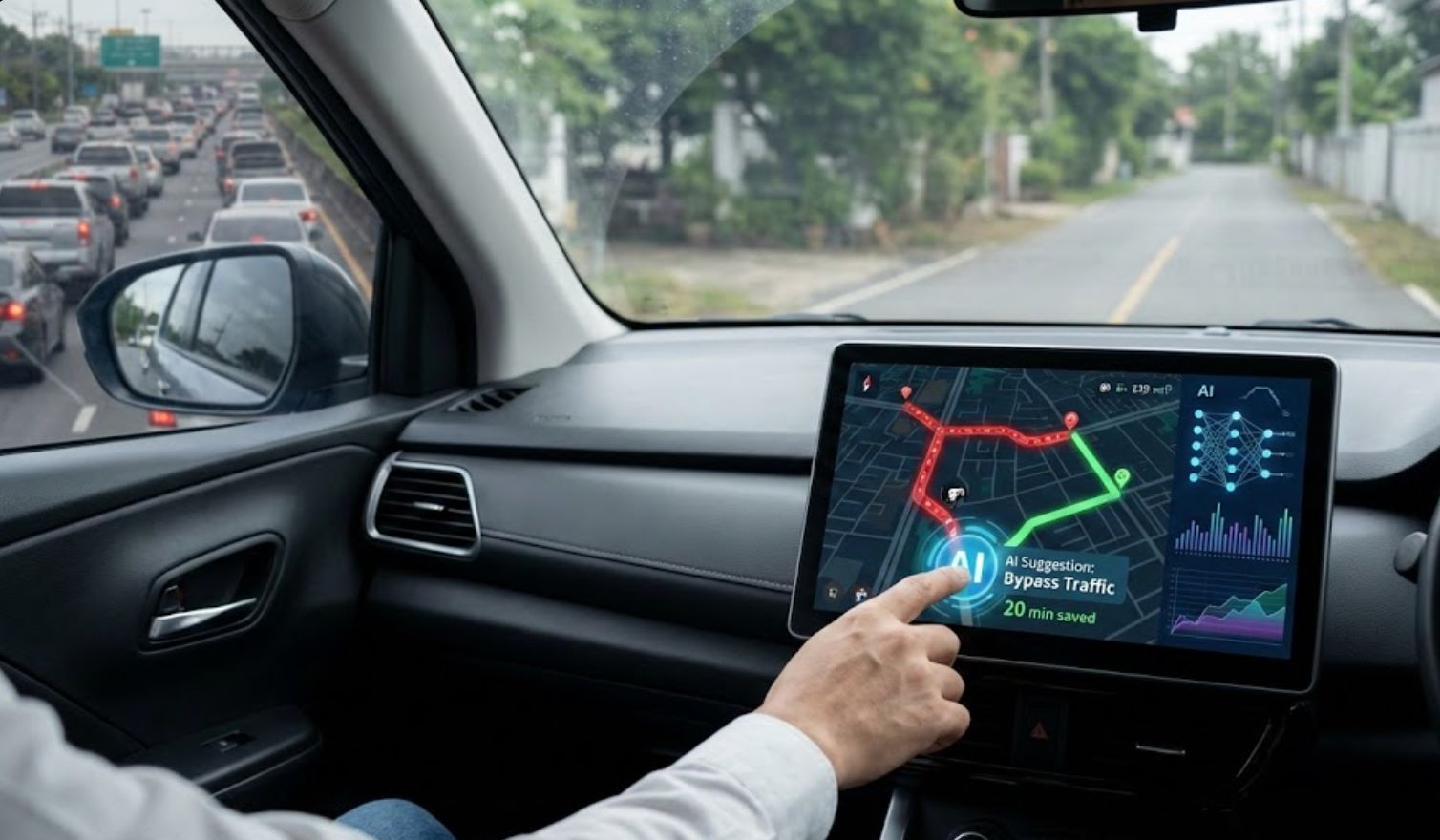
Navigation apps leverage big data to provide faster routes in real time. Google Maps and Waze gather massive vehicle trajectories and incident reports from users, then apply AI to combine historical speed profiles with live conditions. The app suggests detours if a predicted jam is forming, and some systems send alternate-route alerts to thousands of vehicles simultaneously.
Incident & Hazard Detection
AI analyzes camera feeds and sensor data to spot accidents or dangerous conditions instantly. Computer-vision algorithms detect stopped vehicles, debris, potholes, icy patches, or pedestrians on the road and relay alerts to drivers and operators immediately.
Dubai's traffic lab goes further by identifying accident-prone locations so authorities can deploy preventive measures in advance. Crowdsourced incident reports are clustered to confirm hazards faster than traditional 911 reports.
Public Transit & Multi-Modal Optimization
Big data improves buses, subways, and bike networks. AI refines bus schedules based on ridership patterns and traffic forecasts. In London, AI cameras and sensors were trialed to manage passenger flows and speed up ticket gates by up to 30%.
Analytics synchronize buses and trains with traffic signals and each other, reducing wait times. Transport agencies analyze shared-bike and e-scooter usage (via mobile app data) to plan new cycle lanes and optimize multi-modal networks.
Freight & Logistics
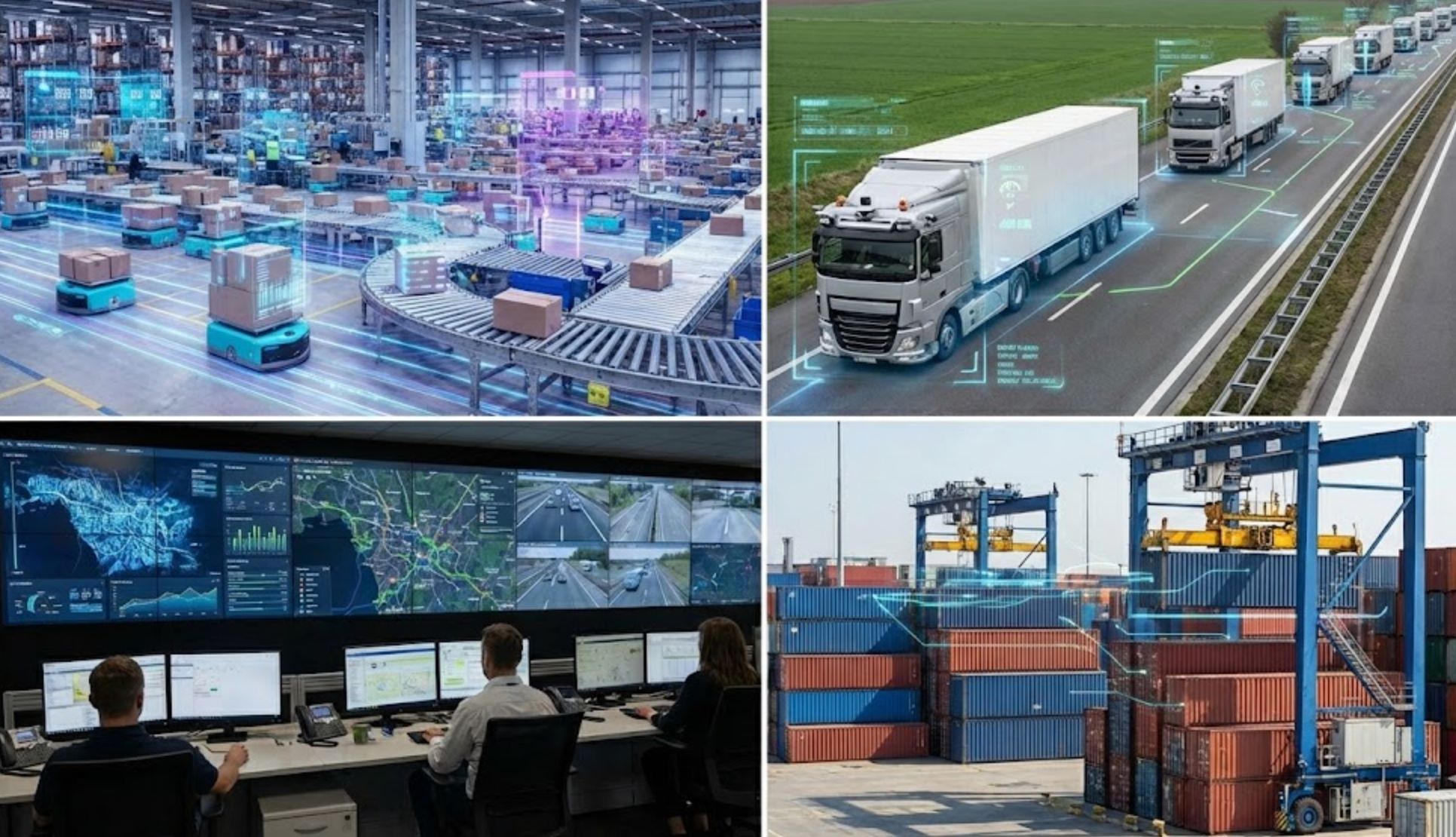
Trucking and delivery fleets use real-time traffic analytics to optimize routes for fuel efficiency. Big data platforms ingest live traffic feeds to reroute freight vehicles around delays, cutting costs significantly. Warehouses use predictive models to time shipments for off-peak traffic windows, and dynamic route optimization AI is now standard in modern logistics software.
Intelligent transportation systems now fuse data and AI to monitor network-wide flow: vehicles communicate with each other (V2V) and with roadside units (V2I), sharing status that helps optimize traffic flow, enhance safety, and reduce delays. Sensors and analytics are the "eyes and ears" of smart mobility, constantly tracking patterns and adjusting controls.

Real-World Examples Worldwide
Leading cities are implementing AI-powered traffic systems with measurable results:
Dubai (2025)
Dubai's Roads & Transport Authority (RTA) launched an AI-powered Transport Data Analysis Lab that fuses data from over 35 sources (metro, buses, taxis, e-scooters, private cars, etc.) into one unified platform.
- AI models scan the dataset to predict congestion before it happens
- System dynamically fine-tunes signal timings during peak hours and events
- Allocates traffic crews and alerts agencies in real time
- Identified hotspots and smoothed traffic during a recent tech expo
Impact: The lab "transforms large volumes of operational data into predictive indicators" to achieve smoother traffic flow, higher efficiency, and improved sustainability.
Singapore
The city-state's Land Transport Authority operates an adaptive system called GLIDE ("Green Link Determining System"). Roadside loops and sensors continuously feed traffic speeds into GLIDE, which dynamically adjusts green-light durations across junctions.
- More coordinated corridors with heavier traffic prioritized
- Overall travel times faster across the network
- New CRUISE platform will integrate more data sources and AI predictions
- Human operators oversee the system with rigorous testing for safety
Approach: Singapore emphasizes that human oversight remains integral, with extensive on-site testing before scaling any new features.
London
Transport for London is rolling out a cutting-edge AI-driven Real Time Optimiser (RTO) for traffic signals in partnership with Siemens. Traffic cabinets have been retrofitted with new sensors and AI software.
- Dynamically retimes lights based on live data
- Smooths traffic and cuts delays significantly
- Reduces congestion and improves air quality by cutting idle emissions
- Balances cycles for pedestrians and cyclists (Healthy Streets initiative)
Early results: Trials suggest substantial reductions in congestion and emissions.
Pittsburgh
Researchers at Carnegie Mellon University developed Surtrac, an AI signal controller now piloted at dozens of intersections. Each Surtrac-equipped intersection uses cameras or radars to detect approaching vehicles and runs a local AI model to calculate optimal green-light schedules.
- Intersections communicate with each other for coordinated flow
- Decentralized AI system reduces dependency on central servers
- Travel times reduced by ~25%
- Braking reduced by 30%
- Idling reduced by 40% compared to fixed-timing signals
Scalability: The system's success has led to adoption in multiple cities and ongoing expansion.

Benefits of Big Data and AI in Traffic
Reduced Congestion
Adaptive AI systems actively cut delays. Surtrac's 25% travel-time reduction means commuters spend less time stuck in traffic.
- Fewer total vehicle-kilometers traveled
- Lower fuel consumption
- Faster commutes
Lower Emissions & Fuel Use
By smoothing stop-and-go traffic, AI-driven control saves fuel and reduces emissions significantly.
- Measurable CO₂ reductions
- Reduced vehicle wear
- Cleaner air quality
Economic Savings
Traffic delay is costly. A U.S. analysis estimated congestion cost drivers about $305 billion in 2017 in wasted time and fuel.
- Billions saved annually from reduced congestion
- More reliable travel times for businesses
- Improved logistics efficiency
Improved Safety
Faster incident detection and management save lives. AI tools spot hazards and alert operators immediately.
- Early hazard detection and alerts
- Accident-prone spot prediction
- Preventive patrols deployed
Better Mobility Services
AI optimizes public transit and freight routing, leading to more efficient deliveries and better on-time performance.
- Real-time traveler information
- Faster bus routes and parking guides
- Automatic disruption adaptation
Network Resilience
Systems automatically adapt to disruptions like special events or weather, maintaining smooth traffic flow.
- Event-based traffic management
- Weather-responsive routing
- Continuous optimization

Challenges and Considerations
Despite the promise, deploying big-data traffic systems comes with significant hurdles that must be carefully managed:
Data Privacy & Security
Collecting and centralizing movement data raises privacy concerns. Authorities must ensure that personal travel information is anonymized and protected.
Cybersecurity measures are essential to prevent unauthorized access to traffic control systems.
Infrastructure Investment
Intelligent systems require extensive hardware – from ubiquitous sensors to high-speed communications (4G/5G networks) and powerful computing infrastructure. Upgrading legacy traffic equipment is costly, and ongoing maintenance is non-trivial, especially for cities with aging infrastructure.
Data Integration & Quality
Traffic data comes from many agencies and private companies. Merging streaming GPS from phones with legacy loop detectors or agency databases is complex. Differences in data formats, coverage gaps, and noisy sensors pose technical challenges.
Many cities now purchase GPS data from Google/Waze to supplement their own sensors, but aligning these sources requires robust data engineering and careful validation.
Algorithmic Bias & Equity
AI decisions must be fair and equitable. If signal priorities favor certain routes or neighborhoods, equity issues arise. Systems must be tuned to serve all users fairly.
Transportation leaders must ensure AI doesn't unintentionally disadvantage cyclists, pedestrians, or underprivileged areas. Singapore, for instance, insists on human oversight to prevent bias and ensure equitable outcomes.
Reliability & Oversight
AI models can fail under unusual conditions (extreme weather, major incidents). Planners stress that these tools should augment, not replace, human operators. As Seoul's traffic chief noted, AI should function as "an assistant" to human decision-makers.

Future Trends
The future of smart transportation looks even more data-driven and intelligent:
5G & Edge Computing
Connected & Autonomous Vehicles
Digital Twins
Generative AI
Analysts foresee a "qualitative shift" toward predictive AI: Dubai's experience suggests that relying on data-driven forecasts rather than reactive responses is becoming the norm. Cities will increasingly anticipate problems before they occur, enabling proactive rather than reactive traffic management.

Conclusion
AI and big data are steadily transforming transportation systems worldwide. Sensors and analytics are the "digital backbone" of modern mobility, enabling cities to anticipate congestion, optimize routes, and invest in the right infrastructure.
With continued innovation and careful management of technological and social challenges, we can expect ever-smarter traffic systems that make commutes shorter, streets safer, and cities more efficient. The convergence of real-time data, advanced analytics, and intelligent decision-making represents a fundamental shift in how urban transportation operates – from reactive problem-solving to proactive optimization.
Related Articles


No comments yet. Be the first to comment!