


































Applications of AI in the Tourism Industry
Artificial Intelligence is reshaping the tourism industry worldwide—enhancing trip planning, boosting customer service, personalizing travel experiences, and optimizing operations for airlines, hotels, and travel agencies. This article explores real-world AI applications and the leading tools driving innovation across the travel ecosystem.
The travel and tourism sector is undergoing a rapid AI-driven transformation. Industry analysts estimate the global "AI in Tourism" market was about $2.95 billion in 2024 and is projected to exceed $13 billion by 2030 (≈28.7% annual growth). This surge reflects how AI tools – from machine learning to generative models – are enabling hyper-personalized experiences and operational efficiency.
For example, AI can craft tailored itineraries in real time, power 24/7 virtual assistants, and optimize pricing and logistics behind the scenes. In short, AI is reshaping travel: airlines, hotels, and travel platforms are all deploying chatbots, recommendation engines, and predictive analytics to create smoother, smarter journeys.
- 1. Personalized Travel Inspiration and Planning
- 2. Smart Transportation and Logistics
- 3. Intelligent Accommodations
- 4. Customer Service and Support
- 5. Marketing, Revenue and Backend Operations
- 6. Safety, Sustainability and Future Trends
- 7. Top AI Tools and Platforms for Travelers
- 8. The AI Travel Revolution is Here
- 9. Related Reading
Personalized Travel Inspiration and Planning
AI is revolutionizing trip planning by giving travelers personalized inspiration. Machine learning and generative-AI tools analyze a person's interests, history, and real-time data to suggest destinations, activities, and routes that fit their preferences. An AI "inspiration tool" can offer tailored suggestions that align with a traveler's interests and budget.
AI-Powered Inspiration
Immersive Previews
In practice, airlines and travel companies now offer AI-driven inspiration platforms – e.g. KLM's "Ask Atlas" – that generate thousands of AI-crafted travel tips and highlight destinations uniquely suited to the user. These systems use natural language processing to understand each traveler and become a kind of AI co-pilot, helping users discover hidden gems or plan dream vacations with personalized guidance.
Conversational Booking
AI also powers the next step: organizing and booking the trip. Intelligent chatbots and assistants can take a set of simple prompts (like "Find me a Christmas week getaway for under $500 from LAX to a warm destination") and instantly pull together flights, hotels, and cars.
Kayak AI Mode
Built on ChatGPT, users type full sentences instead of filling fields. Returns real-time options for flights, accommodations and more based on plain-language queries.
Expedia AI Travel Agent
Virtual assistant handles tasks from changing reservations to checking hotel amenities, verifying wheelchair-accessibility, and finding breakfast options.

Smart Transportation and Logistics
AI is making transportation smarter across the travel industry. Airlines and ride services are deploying AI to improve routes, pricing and customer service.
Airline Operations
Lufthansa Swifty
FLYR Labs Cirrus
Efficiency and Sustainability
Beyond forecasting, AI improves in-flight and ground operations:
- Flight Path Optimization: Lufthansa partnered with Google to optimize flight paths with AI, reducing fuel consumption and CO₂ emissions by calculating more efficient routes.
- Baggage Tracking: Airports employ computer vision and predictive analytics to track luggage and reduce mishandling. Delta Air Lines reported a 25% reduction in lost baggage after deploying an AI-based bag tracking system.
- Autonomous Transport: Cruise lines use AI vision systems for security, trains employ AI for automated control, and ride-hailing services harness AI for routing and surge pricing.

Intelligent Accommodations
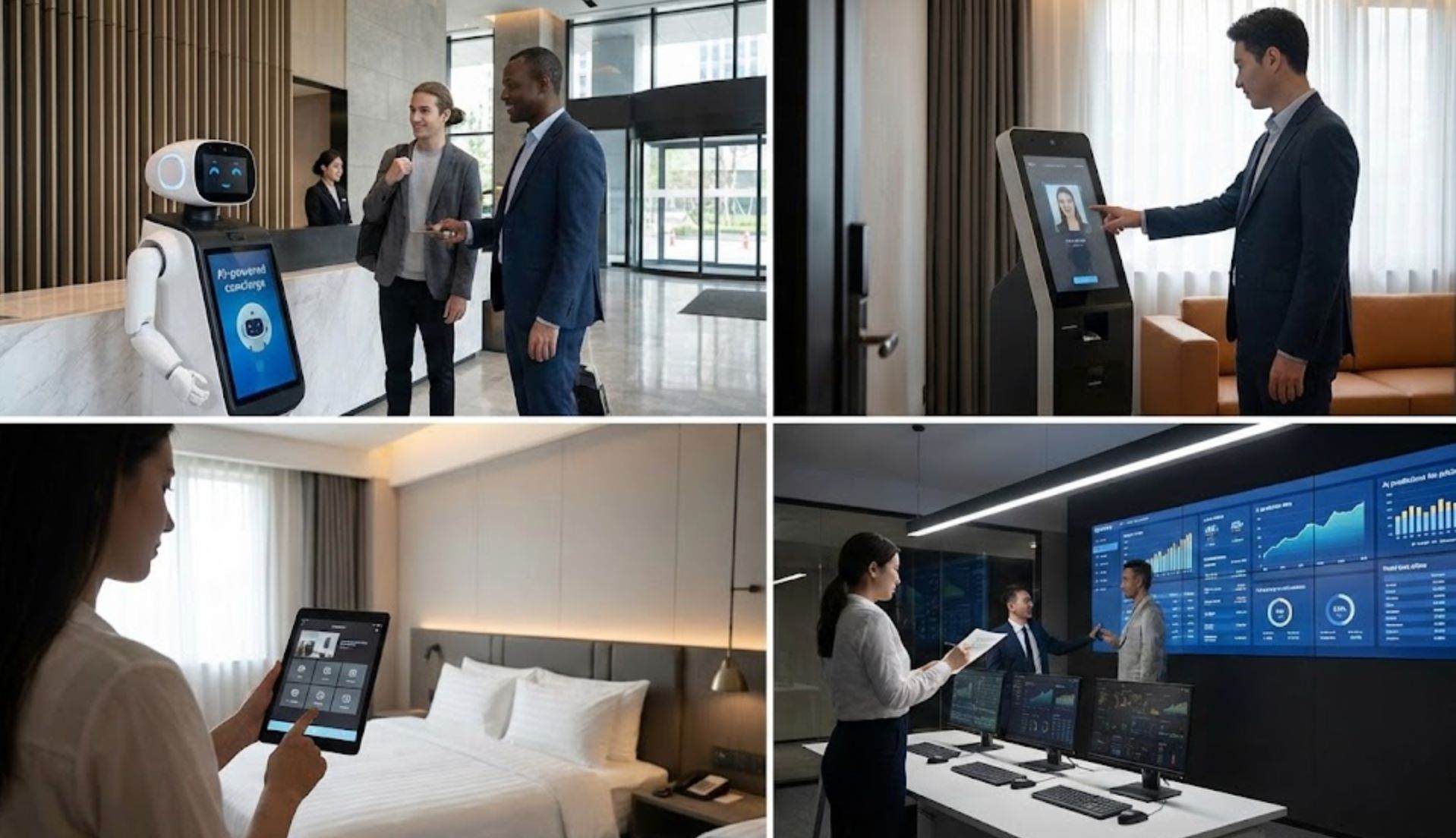
Hotels and resorts are embracing AI to create smarter, more personalized guest experiences. Many large chains have implemented AI-powered room features and services.
AI-Controlled Room Features
InterContinental Hotels Group (IHG) is testing AI-controlled hotel rooms equipped with voice assistants. Partnering with Josh.ai, some IHG properties allow guests to speak natural-language commands ("play jazz music," "lower the lights," etc.), and the AI system adjusts room lighting, entertainment, climate and more to the guest's preferences.
Hyatt Hotels has introduced an AI-powered "smart bed" – sensors in the mattress track breathing and heart rate and automatically adjust firmness and temperature for better sleep. These examples show how AI in accommodations goes beyond backend work to direct customer contact.
24/7 Virtual Concierge
Virtual concierge chatbots – AI-driven helpers available 24/7 – are now common. Sojern's AI Smart Concierge for hotels can field thousands of questions (from "bring extra towels" to "book a spa appointment") using a library of pre-set responses, effectively augmenting or replacing front-desk staff.
Rocket Travel (an Agoda brand) applies AI to translate content and customize loyalty offers across thousands of hotel listings. In aggregate, these AI tools mean guests get instant answers and tailored service, while hotels gather data to improve comfort and loyalty.
Review Analysis & Sentiment
Many hotels adopt AI-based reviews and sentiment analysis. Systems scan online feedback and reviews, automatically tagging issues (e.g. "room too cold," "front desk rude") so managers can fix problems faster.
Otel, a European hotel chain, uses AI to analyze guest reviews across languages – alerting staff to recurring complaints about anything from Wi-Fi to pool cleanliness. This AI-driven feedback loop helps hotels continuously improve the stay experience without waiting for surveys.

Customer Service and Support
Beyond hotels, travel companies deploy AI chatbots and virtual assistants for customer support across the entire travel ecosystem.
AI Chatbots and Support
Airlines (e.g. KLM, Delta, United) and online travel agencies (e.g. Expedia, Booking.com) use AI-powered chatbots to handle common inquiries 24/7, dramatically reducing wait times. These bots can answer FAQs on booking, baggage, flight status, and more – often resolving issues without human intervention.
Language Translation
AI also helps cross language barriers. Translation tools like Google Translate and camera-based apps (Google Lens) allow travelers to instantly translate menus, signs, and conversations in dozens of languages. Voice assistants (Siri, Alexa, Google Assistant) can interpret spoken phrases and respond in the traveler's language. These AI-driven tools turn any smartphone into a personal interpreter, boosting confidence for travelers in foreign countries.
AI Voice Tours and Guides
An emerging frontier is AI voice tours and guides. Travel platforms like Tripadvisor have begun offering AI-powered audio guides: a traveler can simply ask an Alexa or Google Assistant device for recommendations ("What's a must-see in Madrid?") and the AI will narrate a customized tour covering local attractions and restaurants. Such voice-driven assistants leverage large language models to summarize highlights and tailor content to the user's interests in real time. In the coming years, expect more museums, parks, and cities to deploy smart kiosks and bots that give on-the-spot, AI-guided tours and recommendations.

Marketing, Revenue and Backend Operations
On the industry side, AI optimizes marketing, pricing and resource management across travel organizations.
AI-Driven Marketing
Digital advertising platforms for travel use AI to generate and target ads more efficiently. Smartly.io provides AI-powered ad creation and management for travel brands; clients have seen dramatic conversion lifts by automating creative backgrounds and campaign adjustments via AI.
Personalization engines learn from user data: companies like Airbnb and Booking.com use AI-driven recommenders to upsell hotels, flight add-ons, and experiences based on user profiles. These engines analyze millions of booking patterns to suggest "best match" offers – a practice Gartner predicts will boost travel profits by double digits.
Dynamic Pricing and Revenue Management
Revenue management in airlines and hotels now relies heavily on AI and machine learning. Systems ingest historical bookings, seasonal trends, competitor rates and even social events to dynamically price tickets and rooms.
IDeaS Revenue Software
Hopper Booking App
Supply Chain and Operations
Behind the scenes, AI aids supply-chain and staffing too:
- Predictive maintenance: scheduling repairs before breakdowns occur
- Check-in flow optimization: reducing passenger wait times
- Automated border screening: using facial recognition to speed up immigration
- Tour demand forecasting: predicting need for guides and buses to reduce costs
- Customer loyalty management: tracking traveler behavior to offer tailored deals at optimal times

Safety, Sustainability and Future Trends
AI's impact also extends to safety, health and sustainability in travel.
Current Applications
Health Screening
Airports employ thermal imaging and AI to flag health risks (fever screening during outbreaks) without invasive checks.
Crowd Management
AI monitors visitor flows at attractions (via cameras or Wi-Fi signals) to prevent overcrowding and improve safety.
Sustainable Tourism
AI optimizes tourist flows to avoid seasonal congestion and routes vehicles on fuel-efficient paths, reducing environmental impact.
Future Trends (2025–2026)
Industry experts foresee even more advanced applications ahead:
Fully Agentic AI
Many booking sites aim to shift from text-based bots to fully agentic AI: imagine an AI that not only books trips but can autonomously compare packages across platforms, handle cancellations, and even interface with local services (like Uber or a restaurant reservation) end-to-end. Early versions of this are already in trials (Lufthansa's Swifty being one example).
AR/VR Experiences
AI-powered augmented and virtual reality experiences for virtual tourism, allowing travelers to explore destinations before booking.
Contactless Technology
AI-powered contactless solutions for safer, more hygienic travel experiences across airports, hotels, and attractions.
Global Initiatives
Major organizations are pushing for this future. In late 2025, the UN World Tourism Organization declared that "the sector will be transformed by ... Artificial Intelligence," urging members to harness AI for innovation and inclusive growth. A recent UN Tourism declaration calls for incentivizing AI-driven tourism initiatives to empower local entrepreneurs and ensure technology benefits communities worldwide.

Top AI Tools and Platforms for Travelers
For individual travelers and industry insiders alike, numerous AI-powered tools are already available and actively transforming how people plan and experience travel.
Consumer Travel Tools
ChatGPT & LLM Chatbots
Roam Around
GuideGeek & Travelllerly
Major Travel Platform Integrations
Manual Booking Process
- Fill multiple form fields
- Browse dozens of options
- Compare prices manually
- Time-consuming and tedious
Conversational Booking
- Type natural language queries
- AI filters and ranks options
- Real-time price predictions
- Quick, intuitive, personalized
KAYAK AI Mode
Google Flights & Travel
Hopper & Skyscanner
Uber & Lyft
Translation and Communication Tools
- Google Lens & Pocketalk: Real-time language translators that let travelers instantly understand signs or menus in foreign languages.
- AI Chatbots: Suggest local phrases and cultural tips to enhance communication with locals.
- Voice Assistants: Alexa for Hospitality and Marriott's "Alexa in the room" service allow voice control for in-room services.
Corporate Travel Solutions
Pro Tips for Using AI Travel Tools
Start with ChatGPT
Use the ChatGPT website itself for travel planning – it now has travel planning plugins and can access up-to-date data sources.
Ask Specific Questions
Ask things like "What's the best time to book a flight to Tokyo this year?" and the AI will use current data to answer.
Refine Preferences
If the AI suggests a hotel, refine preferences ("pet-friendly, under $200") and it will adjust recommendations accordingly.
The AI Travel Revolution is Here
From chatbots to robotic concierges, and from search engines to smart planners, AI tools are making travel more convenient, informed and personalized. As the industry embraces these technologies, travelers benefit with fewer hassles and more time enjoying the journey.
With AI-powered apps and platforms at hand, booking a trip can be as simple as having a chat – and the AI tools cited above demonstrate that this new era of intelligent tourism is already here.
The transformation of travel through AI is not a distant future – it's happening now. Whether you're planning a weekend getaway or a complex business trip, AI-powered tools are ready to simplify every step of your journey.
Related Reading




No comments yet. Be the first to comment!