


































Applications of AI in Hotel Operations and Management
Artificial intelligence is revolutionizing hotel operations and management by automating front-desk services, optimizing pricing strategies, enhancing guest personalization, and improving operational efficiency. From AI-powered chatbots and predictive maintenance to smart energy management and data-driven marketing, hotels worldwide are leveraging AI to reduce costs, boost revenue, and deliver exceptional guest experiences.
Hotels are rapidly adopting artificial intelligence to streamline operations and enhance guest experiences. AI tools—from chatbots and robots to advanced analytics—are embedded "from the front desk to the back office," helping hoteliers make smarter decisions. For example, consultants note that AI's impact in hospitality is "transformative," refining customer service, boosting revenue management, innovating marketing, and improving overall efficiency. In practice, hotels now use AI to automate check-ins, tailor room features, predict demand, and more, all aimed at satisfying guests and cutting costs.
AI-Powered Guest Services
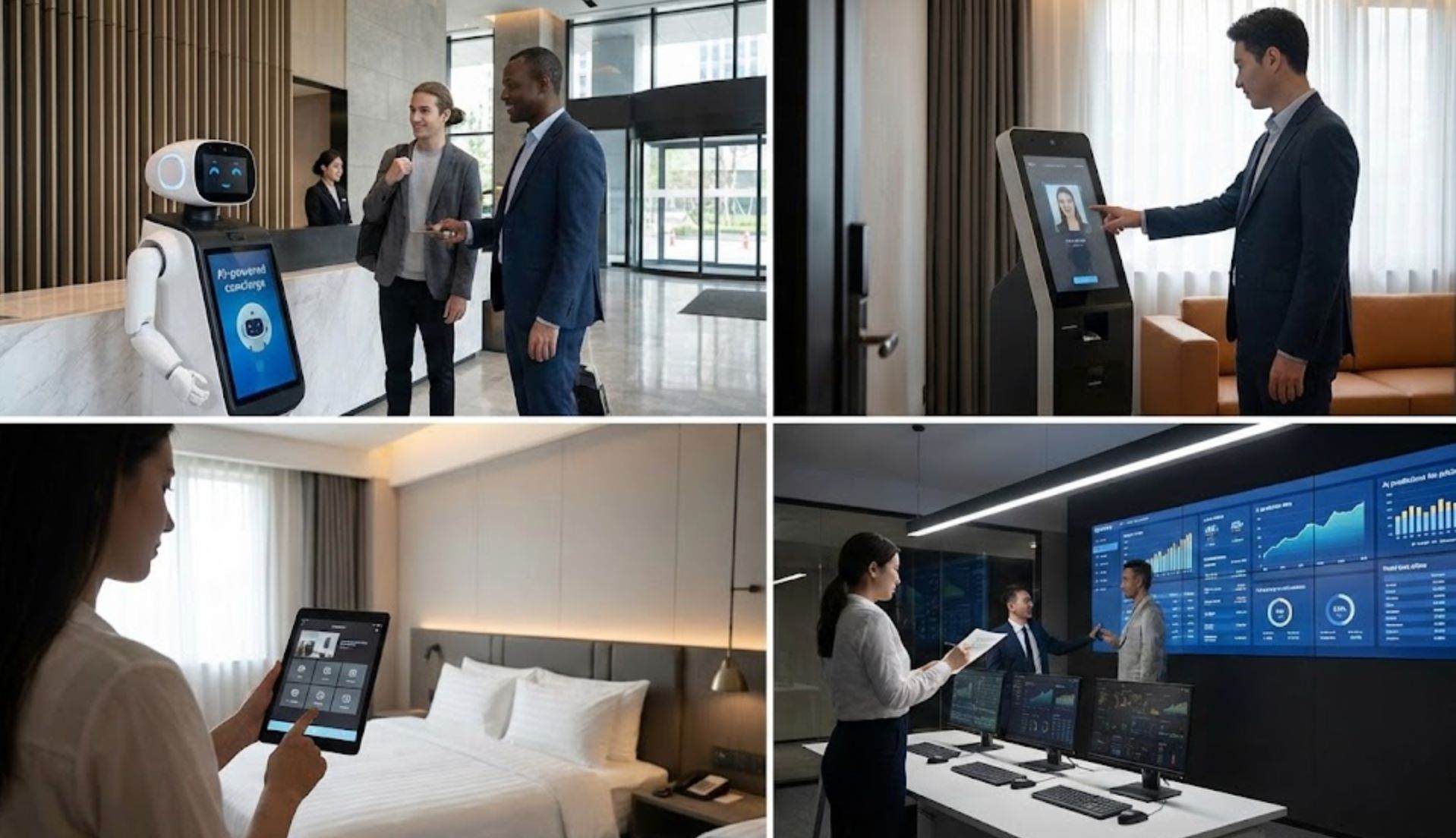
AI chatbots and robots are handling many guest-facing tasks around the clock. Hotels increasingly deploy virtual concierges (via mobile apps or kiosks) to answer common questions instantly. Automated check-in systems using facial recognition or mobile keys speed up arrivals, letting staff focus on personalized care. As NetSuite reports, hoteliers are "using AI to power virtual assistants, optimize housekeeping scheduling, [and] facilitate real-time translation" in guest interactions.
24/7 Chatbots
AI-driven chatbots handle routine inquiries and service bookings instantly, reducing front-desk loads and ensuring support at any hour.
- Wi-Fi passwords & directions
- Room service & upsells
- Instant response times
Automated Check-in
Facial-recognition kiosks and mobile-key apps eliminate wait times and reduce staff intervention.
- Facial recognition
- Mobile key access
- Minimal staff needed
Multilingual Support
AI-powered translation tools enable diverse guests to interact in their preferred language.
- Real-time translation
- Reduced miscommunication
- Global accessibility

Personalized Guest Experience
AI enables hyper-personalization throughout the guest journey by analyzing guest data to tailor services and offers. Smart algorithms adjust room settings before arrival, recommendation engines suggest dining and activities based on past stays, and generative tools craft personalized marketing campaigns.
Customized In-Room Settings
Smart Recommendations
Loyalty & Offers
Personalized Marketing
AI helps hotels deliver experiences tailored to their most valued customers, driving loyalty and higher spend.
— Hospitality Industry Research

Operational Efficiency & Maintenance
AI brings significant gains in back-of-house efficiency through predictive maintenance, smart housekeeping, inventory management, energy optimization, and intelligent staff scheduling. These applications reduce downtime, cut costs, and improve service consistency.
Predictive Maintenance
AI-powered IoT sensors continuously monitor equipment (HVAC, elevators, appliances) and flag issues before failures occur, greatly reducing downtime and repair costs.
Smart Housekeeping
AI software schedules room cleaning dynamically based on check-in/check-out times and guest requests, turning over rooms faster and optimizing staff efficiency.
Inventory & Procurement
AI systems track inventory levels in real time and place automated orders when stocks run low, reducing waste and ensuring consistency in guest services.
Energy Management
AI-enabled building controls adjust lighting, heating, and cooling in real time to save energy, helping hotels meet sustainability goals and lower utility bills.
Staff Scheduling
AI-driven staffing tools align employee shifts with predicted demand using weather forecasts, occupancy data, and historical trends, improving service and employee satisfaction.

Revenue Management & Pricing
AI is revolutionizing how hotels set prices and forecast demand. Machine learning models ingest market data, booking patterns, and external factors (like events or weather) to predict occupancy with high accuracy, while dynamic pricing algorithms automatically adjust room rates in real time.
Dynamic Pricing
Distribution Strategy
Revenue Analytics

Marketing, Sales & Offers
AI powers modern hotel marketing and sales strategies by enabling precise guest segmentation, intelligent upselling, social media management, and event optimization.
- Guest Segmentation: Machine learning clusters guests by behavior and preferences, enabling tailored email campaigns or loyalty offers that resonate with each group (families vs. business travelers).
- Upsell and Cross-sell: During booking and check-in, AI systems recommend add-ons (upgraded rooms, dining vouchers, spa packages) that match a guest's profile, increasing spend and conversion rates.
- Social Media and Reviews: AI-driven tools draft and schedule social-media posts or automate responses to guest reviews, ensuring consistent brand voice and quick engagement.
- Event and Conference Management: AI scheduling tools automate venue bookings, manage attendee lists, and personalize meeting services, boosting revenue from events.
AI helps hotels achieve truly targeted, data-driven marketing to engage guests across channels.
— Hospitality Marketing Research

Back-Office Automation
Beyond guest-facing roles, AI transforms hotel administration across HR, finance, procurement, security, and strategic analytics.
HR & Recruiting
AI automates recruiting tasks (resume screening, job description writing) and forecasts hiring needs, speeding up hiring in hotel HR teams.
Finance & Accounting
AI-powered accounting tools automatically reconcile transactions, detect anomalies (fraud or errors), and expedite invoicing, cutting labor hours significantly.
Procurement & Supply
AI streamlines purchasing by analyzing supplier data, reducing costs, and improving compliance and transparency in vendor management.
Security & Compliance
AI-enhanced video surveillance spots suspicious behavior in real time, while machine learning monitors network activity to prevent data breaches and protect guest information.

Conclusion
AI is reshaping nearly every aspect of hotel management. From automated check-in and virtual concierges to predictive maintenance and dynamic pricing, these technologies drive efficiency and guest satisfaction. Research shows hotels see significant revenue and cost benefits when AI augments their services. As experts advise, achieving full value requires strategic adoption and attention to data ethics.
The hotel industry stands "at the threshold of a revolution in guest experience and operational efficiency," and those who integrate AI thoughtfully—focusing on personalization and transparency—will set the benchmark for future hospitality excellence.


No comments yet. Be the first to comment!