


































Applications of AI in Scientific Research
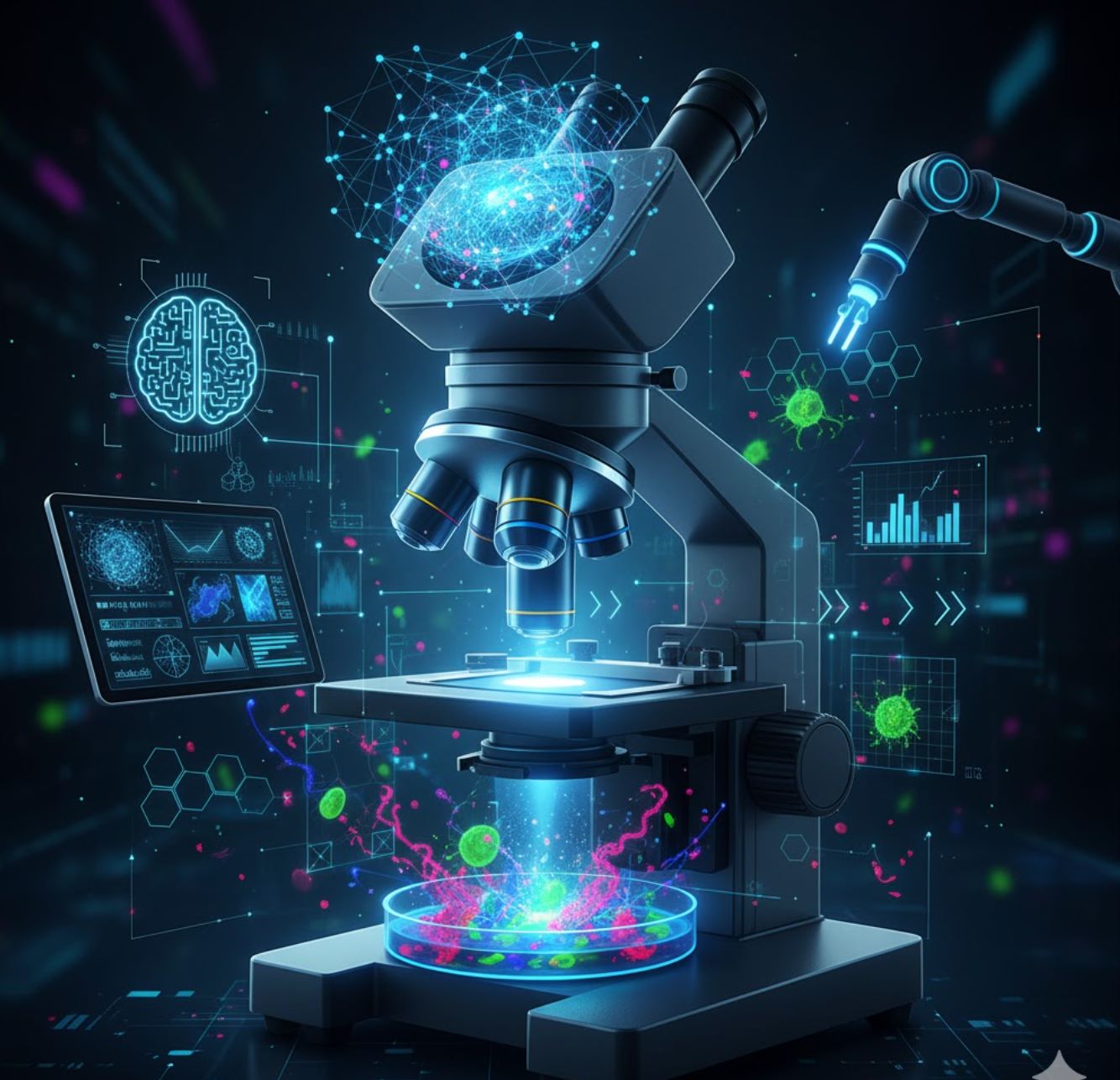
Artificial intelligence (AI) is reshaping how we conduct scientific research. From designing new drugs faster and predicting protein structures with precision to modeling climate systems, AI empowers researchers to achieve breakthroughs at unprecedented speed. This article highlights the most impactful AI applications across major scientific fields and introduces top AI-powered tools driving global research progress.
Artificial intelligence has rapidly become a powerful catalyst in modern scientific research. In recent years, scientists across disciplines have increasingly adopted AI tools to analyze data, model complex systems, and generate new hypotheses. This surge is evident in the literature: academic papers referencing "artificial intelligence" grew from approximately 1,130 in 2003 to over 16,000 in 2024. AI's ability to recognize patterns in vast datasets and perform computations at superhuman speed is enabling breakthroughs that were once impossible.
AI in Biomedical and Life Sciences
In the biomedical realm, AI is driving significant advancements in both research and healthcare practice. AI systems are enhancing medical diagnosis and treatment by detecting diseases from medical images, genomic data, and patient information with remarkable accuracy. Deep learning algorithms can analyze X-rays or MRI scans to identify subtle signs of conditions like cancer or neurological diseases earlier than traditional methods.
Predictive Analytics
Forecasting patient outcomes and disease progression to support clinical decision-making
- Synthesizes vast medical datasets
- Actionable clinical insights
- Early intervention support
Surgical Precision
AI-driven surgical robots assisting in complex procedures with enhanced accuracy
- Greater precision in operations
- Training simulations available
- Reduced procedure time
Drug Discovery Revolution
One of the most celebrated AI breakthroughs in life sciences is in drug discovery. Pharmaceutical researchers are using AI models, including generative neural networks, to design new drug molecules and repurpose existing ones much faster than before.
Since this breakthrough, numerous biotech companies have launched AI-driven drug programs, with some reporting dramatically higher success rates in early trials than traditional approaches. By rapidly screening chemical libraries and predicting how molecules will behave in the body, AI accelerates the discovery of promising therapeutics.
Genetics and Molecular Biology
Another revolution has occurred in genetics and molecular biology. AI systems can sift through massive genomic datasets to find patterns associated with diseases or traits, supporting the emerging field of precision medicine.
AlphaFold's deep learning model can determine protein structures in a matter of hours with atom-level accuracy, a task that used to take scientists years of laborious experiments.
— DeepMind's AlphaFold Achievement
Perhaps the most iconic breakthrough is DeepMind's AlphaFold, an AI system that cracked the 50-year-old "protein folding problem" – the challenge of predicting a protein's 3D structure from its amino acid sequence. This achievement, described as solving a grand challenge in biology decades earlier than expected, has revolutionized structural biology, providing researchers with millions of predicted protein structures via an open database.
With these insights, biologists can better understand how proteins function and interact, aiding everything from enzyme engineering to vaccine design. AI's impact in life sciences ranges from improving crop genomes in agriculture to identifying genetic risk factors in human disease – all contributing to faster and more informed scientific discoveries.

AI in Physical Sciences and Engineering
In the physical sciences – which span physics, chemistry, astronomy, and engineering – AI is proving indispensable for handling the massive datasets generated by modern experiments. Large physics projects, in particular, rely on AI to extract meaningful signals from enormous data volumes.
Particle Physics and Data Analysis
CERN's Large Hadron Collider (LHC) produces petabytes of particle collision data; machine learning filters this torrent of data to detect rare events (like identifying new subatomic particles) that would be nearly impossible to find by manual analysis. AI-driven pattern recognition has become so integral that physicists note their experimental pipeline would "fall apart" without machine learning to make sense of the streaming data.
Materials Science and Engineering
In materials science and engineering, researchers use AI models to simulate properties of new materials and guide experimental design, expediting the development of novel alloys, polymers, and nanomaterials. Tech companies have used deep learning to discover advanced materials for batteries and semiconductors faster than traditional trial-and-error methods.
Astronomy and Cosmic Discovery
Astronomy has been transformed by AI's capabilities. Astronomers employ neural networks to comb through telescope imagery and time-series data, helping identify phenomena like gravitational waves, supernovae, and exoplanets.
Manual Analysis
- Time-intensive manual review
- Human observers may miss subtle patterns
- Limited by human attention span
- Years to process large datasets
Automated Detection
- Rapid pattern recognition
- Identifies subtle cosmic signals
- Processes massive datasets consistently
- Discoveries in days or weeks
A striking case occurred when an AI algorithm analyzing NASA Kepler data uncovered a previously missed exoplanet, completing an eight-planet system around the star Kepler-90. Later, an enhanced neural network called ExoMiner validated 301 new exoplanets in Kepler's archive in one batch, outperforming human experts at distinguishing real planets from false signals. These successes highlight how AI can accelerate cosmic discoveries by rapidly vetting huge data sets for patterns.
Similarly, in climate-related Earth observations, AI helps process satellite imagery to detect events like wildfires or map features like polar ice changes with high speed and accuracy.
Chemistry and Autonomous Experimentation
AI's role in chemistry and experimental engineering is equally impressive. Machine learning models are used to predict chemical reaction outcomes and design more efficient catalysts, reducing the need for exhaustive lab testing. In cutting-edge laboratories, AI-driven robots are beginning to autonomously conduct experiments.
This demonstrates how AI can dramatically speed up materials discovery and engineering innovation. From designing aerospace components with optimal shapes to controlling quantum experiments, AI techniques are enabling engineers and physical scientists to push the frontiers of knowledge faster and more efficiently.

AI in Environmental and Earth Sciences
Environmental science and related fields (ecology, geology, climatology, and agriculture) are benefiting greatly from AI's predictive and analytical strengths. Climate scientists are using AI to build more accurate climate models and weather forecasting systems.
Climate and Weather Prediction
Deep learning models can ingest heterogeneous environmental data – from satellite images to sensor networks – and improve the simulation of complex climate patterns and extreme weather events. AI has been applied to weather prediction to enhance short-term forecasts of rainfall or hurricanes, sometimes outperforming traditional meteorological models in capturing local patterns.
Disaster Preparedness
Improved forecasts help communities prepare for natural disasters
- Enhanced accuracy in predictions
- Early warning systems
- Better resource allocation
Digital Earth Twins
Virtual climate simulations to test intervention scenarios
- Policy decision guidance
- Risk assessment modeling
- Climate adaptation planning
Environmental Monitoring and Conservation
AI's prowess in image recognition is being harnessed for environmental monitoring and conservation. One remarkable application is using AI to analyze high-resolution satellite and drone imagery of forests, oceans, and wildlife habitats. AI can detect deforestation and land-use changes down to the level of individual trees, allowing authorities to identify illegal logging or habitat loss in near real-time.
Precision Agriculture
In agriculture, precision farming techniques leverage AI to boost productivity and sustainability. Farmers deploy AI systems that process data from soil sensors, weather stations, and crop images to optimize irrigation and fertilizer use.
- Predict crop yields with high accuracy
- Detect pest outbreaks early for timely intervention
- Diagnose plant diseases from leaf photographs
- Optimize resource use and reduce waste
- Provide smartphone tools for farmers to identify issues
Water Resource Management
Water resource management is another area where AI aids decision-making. By analyzing sensor data on water quality and usage, AI can help predict droughts or optimize water distribution for irrigation. Even in geology, researchers apply AI to interpret seismic data for earthquake patterns or to locate mineral deposits by finding subtle signals in geophysical surveys.
In essence, AI equips environmental scientists with a "microscope" for big data – revealing insights about our planet's systems that would remain hidden under traditional approaches. These insights contribute to better environmental protection strategies and more informed responses to global challenges like climate change and food security.

AI Tools Empowering the Research Process
Beyond field-specific breakthroughs, AI is also streamlining the research process itself for scientists. Today, a growing suite of AI-powered tools is available to help researchers at every step of their workflow. There are AI tools dedicated to data analysis, which can automatically crunch experimental results or perform statistical analyses far quicker than manual coding. Other tools focus on literature review and knowledge synthesis: for example, AI-driven search engines can scan millions of academic papers and pull out relevant findings or even summarize papers on a given topic. This helps scientists overcome information overload by making it easier to find and digest the most pertinent publications. In fact, dozens of specialized AI research tools now exist, covering tasks from literature mapping and multi-document summarization to citation management and writing assistance. Imagine being able to ask a research question in natural language and having an AI system retrieve key points from the top 100 papers on that question – this is increasingly feasible with advanced semantic search platforms. Tools like semantic scholarly search engines use natural language processing to understand researchers’ queries and provide aggregated answers or annotated bibliographies. Some platforms (e.g. those by Semantic Scholar or Google’s AI) can even highlight contradictory findings between studies or flag potential errors. Writing assistants have emerged as well: large language models (such as ChatGPT and others) can help draft sections of a paper, translate scientific text, or suggest clearer phrasing. Researchers use these with caution – as a “sparring partner” to refine their thinking – while ensuring final writings are their own. Journal publishers and funding agencies are also exploring AI to improve their processes. For instance, AI tools are being tested for peer review support, automatically checking manuscripts for statistical errors, plagiarism, or missing citations to aid human reviewers (though human judgment remains crucial). Overall, these AI assistants save researchers time on menial tasks and enable them to focus more on creative and critical aspects of science. To illustrate the variety of AI tools now available to scientists, here are a few notable examples and applications:

AlphaFold (Biology)
Application Information
| Developer | DeepMind (Alphabet Inc.) |
| Supported Platforms |
|
| Language Support | Global availability; documentation primarily in English |
| License | Free and open-source (Apache 2.0 license) |
Overview
AlphaFold is a groundbreaking AI-powered tool that revolutionizes protein structure prediction. Developed by DeepMind, it uses deep learning to accurately forecast 3D protein shapes from amino acid sequences—a task that previously required years of laboratory experiments. AlphaFold's rapid predictions accelerate research in drug discovery, genetics, molecular biology, and biotechnology, making it one of the most influential innovations in modern scientific research.
How It Works
AlphaFold applies advanced neural networks trained on vast biological datasets to predict protein folding patterns with near-experimental accuracy. Its breakthrough performance in the CASP14 (Critical Assessment of protein Structure Prediction) competition demonstrated its ability to outperform traditional computational models. By analyzing sequence evolution, physical constraints, and structural relationships, AlphaFold generates high-confidence protein models that support a wide range of scientific applications. The tool is open-source, enabling researchers worldwide to run predictions locally or integrate them into computational pipelines. Additionally, millions of precomputed structures are freely available in the AlphaFold Protein Structure Database.
Key Features
3D protein structure prediction from amino acid sequences with near-experimental accuracy
Fully open-source code with reproducible pipelines for transparency and collaboration
Seamless integration with protein databases including UniProt, PDB, and MGnify
Ability to model proteins lacking structural templates or homologous references
Ideal for drug discovery, genomics, molecular biology, and biotechnology research
Millions of precomputed structures available for free in the AlphaFold Protein Structure Database
Download or Access
Installation & Usage Guide
Visit the official GitHub repository to access installation instructions and source code.
Set up a compatible environment using Docker, Conda, or native Linux tools based on your system.
Download necessary databases (UniRef90, MGnify, PDB70, etc.) as instructed in the documentation.
Input protein sequences in FASTA format for structure prediction.
Execute the AlphaFold pipeline to generate predicted 3D protein structures.
Visualize the output using molecular visualization tools such as PyMOL or ChimeraX.
Use confidence metrics (pLDDT, PAE) to assess model reliability and prediction quality.
Limitations & Considerations
- Static Predictions: Cannot simulate dynamic protein movements or multiple conformations
- Computational Requirements: Requires significant computational resources, especially GPU memory for practical run times
- Complex Structures: Performance decreases for large protein complexes or proteins with flexible/disordered regions
- Setup Complexity: Installation and database setup can be time-consuming and technically demanding
Frequently Asked Questions
Yes, AlphaFold is completely free and open-source under the Apache 2.0 license, making it accessible to researchers worldwide.
AlphaFold-Multimer can model some protein complexes, but accuracy varies depending on the complexity of the interaction and available training data.
A GPU is strongly recommended for practical run times. CPU-only computation is possible but significantly slower and may not be feasible for large proteins.
Millions of predicted structures are available in the AlphaFold Protein Structure Database hosted by EMBL-EBI, providing free access to precomputed models.
Yes, AlphaFold supports early-stage drug discovery by providing accurate protein structures for target analysis, molecular docking, and structure-based drug design.

Exscientia’s AI Drug Designer (Pharmacology)
Application Information
| Developer | Exscientia |
| Platform Type | Web-based cloud platform for desktop environments |
| Language Support | English (global availability) |
| Pricing Model | Paid enterprise solution (no free plan) |
Overview
Exscientia's AI Drug Designer is a cutting-edge platform that harnesses artificial intelligence to accelerate pharmaceutical drug discovery. By combining deep learning, molecular modeling, and automated optimization, it transforms how researchers identify and refine small-molecule drug candidates. The platform significantly reduces the time, cost, and risk of traditional R&D by generating high-quality molecular structures tailored to specific therapeutic targets. Used by pharmaceutical companies, biotech firms, and research institutions worldwide, it streamlines discovery pipelines and brings impactful medicines to market faster.
How It Works
The platform leverages proprietary AI algorithms trained on extensive biological and chemical datasets to generate optimized drug candidates with enhanced potency, selectivity, and pharmacokinetic profiles. Through iterative learning cycles, AI models propose designs, evaluate predicted performance, and refine structures across multiple rounds—reducing dependency on manual trial-and-error experimentation.
Exscientia's human-AI hybrid approach allows domain experts to guide the system with insights related to safety, mechanism of action, and disease biology, creating a highly efficient collaborative workflow. Multiple AI-designed molecules from Exscientia have successfully advanced into clinical evaluation, demonstrating real-world practical value.
Key Features
Automated generation and optimization of small-molecule drug candidates using advanced algorithms.
Comprehensive analysis of potency, selectivity, ADME, and safety properties before synthesis.
Automated refinement across multiple molecular properties to enhance candidate quality.
Seamless incorporation of experimental data for continuous iterative design improvements.
Access & Download
Getting Started
Contact Exscientia through their official website to inquire about platform access or collaboration opportunities.
Provide target information, research goals, and therapeutic focus areas to guide the partnership.
Exscientia's team configures a customized AI-driven workflow tailored to your specific therapeutic target.
Provide available biological or chemical data to enhance model accuracy and predictions.
Obtain AI-generated molecular designs optimized for your target, ready for laboratory synthesis and validation.
Cycle between computational predictions and experimental feedback to progressively improve candidate quality.
Progress top-performing candidates to preclinical evaluation and clinical development stages.
Important Considerations
- Performance varies depending on available training data and target complexity
- Best suited for organizations seeking collaborative partnerships rather than standalone software
- Specializes in small-molecule therapeutics across multiple disease areas
Frequently Asked Questions
No. It is an enterprise-level cloud platform accessible exclusively through partnerships with Exscientia, not as a standalone downloadable application.
No. While AI significantly accelerates the discovery process, experimental validation and clinical testing remain essential. The platform enhances efficiency but cannot eliminate the inherent risks of drug development.
Yes, smaller labs can access the platform, but typically through collaboration agreements rather than self-service access. Exscientia works with organizations of various sizes to establish partnerships.
The platform specializes in small-molecule therapeutics and can be applied across multiple disease areas, from oncology to infectious diseases and beyond.
Yes. Several AI-designed candidates from Exscientia have successfully entered clinical trials, demonstrating the platform's real-world effectiveness in advancing drug development.

Large Hadron Collider Data Analysis (Physics)
Application Information
| Developer | CERN (European Organization for Nuclear Research) |
| Supported Platforms |
|
| Language Support | Global availability; documentation primarily in English |
| Pricing Model | Free access to CERN Open Data tools; full LHC computing resources available only to collaboration members |
Overview
The Large Hadron Collider (LHC) generates billions of particle collision events per second, producing some of the world's largest scientific datasets. AI-driven tools and computational platforms help researchers interpret this massive data to detect meaningful signals, identify anomalies, reconstruct particle trajectories, and accelerate physics discoveries. These tools are essential for understanding fundamental processes like the Higgs boson, dark matter candidates, and subatomic particle behavior. By integrating machine learning into physics workflows, the LHC significantly enhances research efficiency and precision.
Key Features
Advanced event classification and particle identification using neural networks and decision trees.
AI-powered filtering to distinguish rare events from background noise and uncover unexpected signatures.
Seamless integration with CERN's ROOT framework and Worldwide LHC Computing Grid (WLCG) for distributed processing.
Distributed computing infrastructure supporting large-scale physics analysis across hundreds of institutions worldwide.
Enhanced simulation capabilities and accelerated reconstruction algorithms for faster analysis cycles.
Tools to inspect detector hits, reconstructed tracks, and energy profiles for comprehensive data exploration.
Download or Access
Getting Started
Visit the CERN Open Data Portal to download publicly available LHC datasets and explore curated collections.
Set up the ROOT data analysis framework or use cloud-based Jupyter notebooks provided by CERN for immediate access.
Import datasets and examine event metadata, detector information, and simulation files using interactive tools.
Deploy machine learning models such as Boosted Decision Trees (BDTs) and neural networks for event selection and classification.
Use visualization tools to inspect detector hits, track reconstruction, and energy profiles for detailed analysis.
Run analyses locally on standard computers or submit large-scale jobs through distributed grid computing resources for production work.
Validate findings against reference datasets and published research to ensure accuracy and reproducibility.
Requirements & Limitations
- Strong background in physics and programming (Python/C++)
- Understanding of machine learning and statistical analysis
- Familiarity with ROOT framework or similar data analysis tools
- Not suitable for casual users or beginners without scientific training
- Basic exploration possible on standard computers
- Full-scale analysis requires HPC clusters or WLCG grid access
- Computationally intensive; processing times vary with dataset size
- Not available as a consumer application
Frequently Asked Questions
Yes. CERN provides curated, high-quality datasets through the CERN Open Data Portal, making significant portions of LHC research data accessible to the global scientific community and educators.
Beginners can explore open data through educational resources and tutorials, but advanced analysis requires strong expertise in physics, programming, and machine learning. CERN offers learning materials to help newcomers get started.
Python and C++ are the primary languages, especially within the ROOT framework. Python is preferred for rapid prototyping and machine learning workflows, while C++ is used for performance-critical components.
Yes. CERN actively integrates machine learning throughout its research pipeline, including real-time trigger systems, offline reconstruction workflows, and advanced physics analysis. These tools are production-grade and continuously developed.
Basic data exploration can be performed on standard computers using cloud-based notebooks. However, full-scale analysis of large datasets requires access to high-performance computing clusters or the Worldwide LHC Computing Grid (WLCG).

Scite (Literature Analysis)
Application Information
| Developer | Scite Inc. |
| Supported Platforms |
|
| Language Support | Global access; interface primarily in English |
| Pricing Model | Free tier with limited features; full access requires paid subscription |
What is Scite?
Scite is an AI-powered literature analysis platform that revolutionizes how researchers evaluate scientific papers. Unlike traditional citation metrics that only count references, Scite analyzes the context of each citation to determine whether it supports, contrasts, or simply mentions the referenced work. This contextual approach enables researchers to assess credibility, influence, and scientific impact with greater precision.
How It Works
Scite uses machine learning models trained on millions of scientific articles to classify citation intent and provide actionable insights. The platform aggregates citation statements from publishers, preprint servers, and open-access databases, organizing them into an intuitive interface. Each paper receives a "Smart Citation" profile showing how many times it has been supported, contradicted, or mentioned by other studies—enabling a nuanced understanding of scientific validity and research influence.
Key Features
Contextual citation analysis showing supporting, contrasting, and mentioning references
Advanced search with contextual citation filtering for precise results
Monitor citation trends, research impact, and author influence in real-time
Quick paper evaluation and Smart Citation access while reading online
Seamless integration with Zotero, EndNote, and other academic tools
Connect with major publishers and open-access databases for comprehensive coverage
Access Scite
Getting Started
Sign up on the Scite website to access free or premium features.
Use the search bar to find scientific papers or research topics of interest.
View citation profiles to see how each paper is cited in context across the literature.
Filter results by supporting, contrasting, or mentioning statements for targeted analysis.
Use dashboards to monitor citation patterns, author influence, and topic developments.
Add the browser extension for quick Smart Citation access while reading articles online.
Export citation data or connect Scite with your reference management tools.
Limitations & Considerations
- Free plan includes limited searches and citation data access
- Some papers may lack contextual citation data if not yet indexed
- AI classification may occasionally misinterpret citation intent
- Not a substitute for comprehensive critical evaluation of scientific literature
- No standalone mobile app available (web browser access only)
Frequently Asked Questions
Yes, Scite offers a free tier with basic features. However, advanced functionality and expanded search capabilities require a paid subscription.
While Google Scholar counts citations, Scite analyzes citation context to determine whether references support, contradict, or mention a paper. This contextual approach provides deeper insights into scientific reliability and research validity.
Yes, Scite integrates seamlessly with popular reference management tools including Zotero, EndNote, and other academic software.
Scite covers a wide range of disciplines and research areas. Coverage depends on publisher and database indexing, with continuous expansion across academic fields.
No standalone mobile app exists currently. However, Scite is fully functional on mobile browsers, providing responsive access on smartphones and tablets.
Human-AI Collaboration in Science
Each of these examples showcases how specialized AI applications and tools are propelling science forward. Importantly, they also underline a key point: AI is augmenting human researchers, not replacing them. The best outcomes arise when human expertise and creativity are combined with AI's speed and pattern-recognition prowess.
Strengths
- Formulate hypotheses
- Interpret complex results
- Provide ethical oversight
- Creative problem-solving
Strengths
- Process massive datasets
- Identify subtle patterns
- Perform computations rapidly
- Handle repetitive tasks
Scientists still formulate the hypotheses, interpret results, and provide ethical oversight, while AI acts as a powerful assistant handling data-heavy tasks.
Maintaining Research Integrity
From finding new medicines and materials to unraveling cosmic mysteries and environmental trends, AI's applications in scientific research are extraordinarily diverse and impactful. By automating arduous tasks and uncovering subtle patterns, AI enables researchers to achieve in days what might previously have taken years.
In essence, AI is a transformative tool – one that must be used thoughtfully – but when applied responsibly, it holds the potential to solve some of science's toughest challenges. The continued integration of AI into scientific research is poised to usher in a new era of innovation, where breakthroughs occur faster, collaboration spans across disciplines, and our understanding of the world deepens in ways we are only beginning to imagine.



Comments 0
Leave a Comment
No comments yet. Be the first to comment!