


































Applications of AI in the Fashion Industry
Artificial Intelligence (AI) is transforming the global fashion industry. This article explores 5 standout AI applications: generative AI for fashion design, intelligent trend forecasting, supply chain and inventory optimization, personalized shopping experiences, and AI-powered marketing tools like virtual stylists and chatbots. It also highlights AI's growing role in sustainable fashion—enhancing recycling, resale, and counterfeit detection. A must-read for brands, designers, and tech-savvy fashion lovers.
Artificial intelligence (AI) is transforming the fashion industry from end to end – revolutionizing how clothes are designed, manufactured, marketed, and sold. What began with simple product recommendations has evolved into AI-driven creativity and data analytics that are now business necessities for fashion brands. In fact, over one-third of fashion executives report using generative AI in areas like customer service, image creation, copywriting, and product discovery as of mid-decade.
AI-Powered Design & Trend Forecasting
AI is increasingly acting as a creative partner to designers and a powerful tool for trend forecasters. Generative AI tools can produce original fashion designs or help refine concepts by analyzing vast datasets and generating novel ideas.
Design Generation
Startups like Cala use OpenAI's DALL-E to generate illustration and photorealistic renderings of garments from text prompts or reference images, which designers can then refine into real products.
Tommy Hilfiger's "Reimagine Retail" initiative (with IBM and FIT) analyzes massive datasets of fabrics, colors, and images to forecast emerging design trends faster than traditional methods.
Trend Forecasting
Machine learning vision systems scan millions of social media images daily to detect emerging patterns in colors, silhouettes, and clothing items.
Heuritech analyzes 3 million+ fashion images on Instagram per day, detecting early signals of trending items and predicting popularity across consumer groups and regions. Luxury brands like Dior, Prada, and Louis Vuitton use these insights to inform strategy.
Fast-fashion players like Shein employ algorithms to gauge consumer buzz online and launch new products within days. By replacing gut instinct with data, AI-powered trend forecasting helps brands design what customers actually want, reducing guesswork and maximizing profitability while minimizing waste.
Supply Chain Optimization & Inventory Management
One of the most impactful applications of AI in fashion lies in demand forecasting and supply chain management. The industry has long struggled with overproduction – an estimated 2.5 billion garments go unsold each year (worth $70–$140 billion), with about 25% of clothes ultimately incinerated or dumped in landfills.
How AI Optimizes Inventory
Machine learning models analyze historical sales, sell-through rates, online browsing data, social media trends, and even weather or economic signals to forecast which styles, in what quantities, will sell in upcoming seasons. These predictions help retailers optimize inventory levels and prevent the oversupply that leads to markdowns or waste.
Zara's Real-Time Approach
Zara has adopted advanced data analytics to track in-store and online transactions in real time and adjust production accordingly. Its AI systems analyze sales patterns and customer feedback from stores worldwide, enabling rapid detection of trend shifts and supply chain redirection.
Using RFID tags and IoT technology, Zara's algorithms recommend production quantities and distribution down to specific regions, reducing forecasting errors and improving sustainability.
H&M's Demand-Driven Model
H&M uses AI and customer data to inform its "demand-driven" supply chain. The company's leadership emphasizes that a garment with no demand "is the worst [thing] for the environment."
By producing closer to actual demand, H&M avoids unsold inventory piling up, addressing both cost and sustainability concerns simultaneously.
Advanced Planning & Visibility
AI-driven planning tools enable scenario planning (testing how changing production quantities or delivery timing affects sales and inventory) and end-to-end visibility. Integrated platforms ingest data from sourcing, manufacturing, logistics, and retail points to provide a holistic view of the supply network.
Armed with this insight, brands can proactively reroute shipments or adjust factory capacity to prevent stock shortages or oversupply. The result is a leaner, more responsive supply chain that eliminates guesswork from production decisions, cuts costs, and reduces the fashion industry's notorious overstock waste.

Personalized Shopping Experiences & Recommendations
Modern consumers expect personalized shopping experiences, and AI is the engine making that possible at scale. Recommendation algorithms analyze each shopper's browsing behavior, purchase history, body profile, and social media activity to suggest products they are most likely to love.
Smart Product Recommendations
Amazon employs machine learning models that cluster customers with similar sizing and purchase patterns to serve highly relevant product recommendations. These engines learn individual style preferences and contexts, noting patterns like a preference for minimalist sneakers and neutral colors, then highlighting new arrivals that fit that profile.
Virtual Stylists & AI Shopping Agents
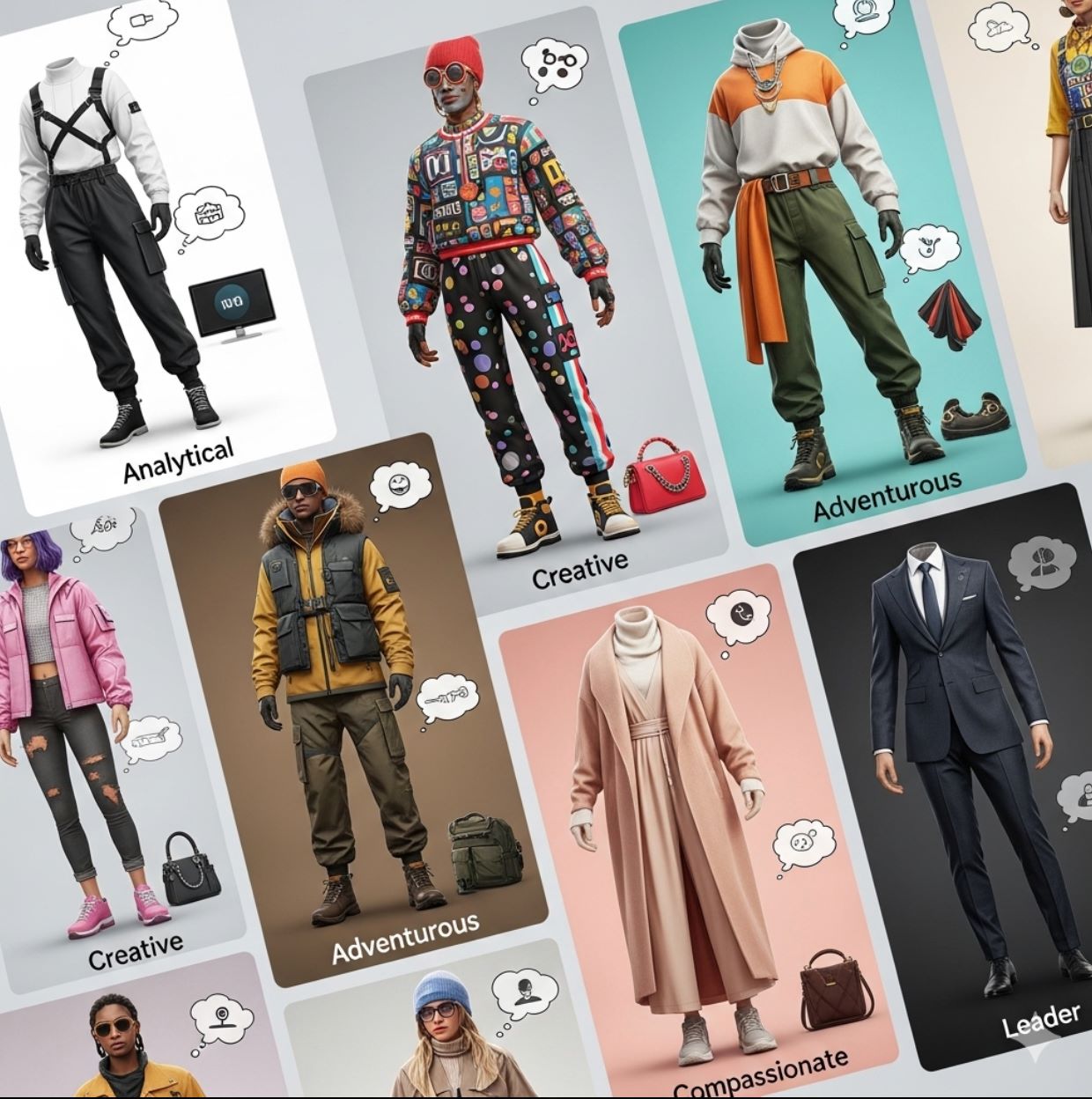
Beyond product suggestions, AI powers personal stylists and virtual shopping assistants. Instead of static filters, fashion apps now feature AI agents or chatbots that converse with customers to refine recommendations, taking into account style goals, occasion, preferred fit, and current wardrobe to propose complete outfit ideas.
Stitch Fix
DressX
Daydream
Solving the Fit & Sizing Challenge
Returns due to poor fit cost retailers billions and frustrate shoppers. AI is tackling this critical problem with tools that recommend the right size and simulate fit.
- Amazon's size recommendations: Analyzes past orders, compares with similar shoppers, factors in product-specific info (cut, fabric stretch, brand quirks), and mines customer reviews for fit feedback to suggest optimal sizes.
- True Fit & Easysize: Aggregate body measurement data and garment specs to predict optimal sizing across different brands.
- Nike's 3D foot scanning: Smartphone app uses computer vision to scan feet and determine exact shoe size for perfect online sneaker fit.
- Google's virtual try-on: AI-powered feature shows clothes on 40+ diverse body models, allowing customers to see how items drape on bodies similar to their own, building purchase confidence.
By addressing fit and personalization with AI, retailers improve customer satisfaction, reduce costly returns and exchanges, and build trust in online fashion shopping.

AI in Fashion Marketing & Customer Engagement
AI's influence extends to how fashion is marketed and how brands engage customers. In advertising and content creation, AI tools are helping produce eye-catching visuals and copy at lower cost and faster speed.
Generative AI for Visual Content
Generative AI for images allows brands to create marketing visuals without extensive photoshoots. The retailer Revolve crafted an imaginative 2023 ad campaign using generative art to visualize fashion fantasies that would have been difficult or expensive to stage in reality.
Some fashion houses are generating entire product photoshoots with AI: startups like Botika offer AI-generated models, enabling brands to display clothing on diverse virtual models of different ethnicities and body types without hiring additional photographers or talent. Levi's tested AI-generated models (via Lalaland.ai) to showcase clothing on more diverse body shapes, supplementing human models while cutting costs and improving inclusivity.
AI-Powered Copywriting & Personalization
Brands are using AI text generators (powered by large language models) to draft product descriptions, social media captions, and marketing emails. Adore Me, a lingerie brand, employs generative AI to write SEO-optimized product descriptions, saving an estimated 30 hours of copywriting work per month and boosting organic web traffic by 40%.
AI-written content can be quickly tailored to different audiences – adjusting tone or highlighting specific product features – which helps with A/B testing marketing messages. Moreover, AI personalizes content itself: automated marketing emails include AI-recommended products for specific recipients, and websites dynamically show different homepage banners depending on visitor profiles (e.g., highlighting menswear vs. womenswear based on past behavior).
AI Chatbots & Virtual Assistants
Many fashion retailers now feature AI-powered chat interfaces on their sites or apps to handle customer queries and provide styling advice. These bots use natural language processing to understand questions like "What shoes should I wear with a navy suit?" and suggest appropriate products.
Kering's ChatGPT Stylist
Zalando's Fashion Chatbot
These assistants make the online shopping journey more interactive and "natural", especially for younger consumers accustomed to messaging interfaces. While current chatbots occasionally falter, they are improving rapidly with more training data. Brands see significant potential: AI chat agents are available 24/7, handle countless customers simultaneously, and can upsell by learning preferences and recommending complementary items.
Virtual Influencers & Immersive Experiences
AI-generated virtual influencers like Lil Miquela have gained prominence in fashion marketing. Lil Miquela is a CGI-created persona with millions of followers who has "modeled" for top luxury brands (such as Prada) and engages audiences through social media posts and music releases. Fashion brands create these virtual avatars using generative AI and 3D modeling, then script them with AI language models to interact authentically with fans. By deploying virtual brand ambassadors, companies can tightly control brand image and appeal to tech-savvy Gen Z consumers in the metaverse era.
AI also enables virtual fashion shows and augmented reality experiences. During the pandemic, brands experimented with AI to create digital runway shows or 3D animated lookbooks when physical events were canceled. AI Fashion Week debuted in 2023, featuring collections designed with AI assistance and presented via mixed reality.
In augmented reality (AR), retailers incorporate AI to let customers point their phone camera at themselves and see garments superimposed – for example, AR "try-on" filters for sneakers or jewelry on Instagram use AI vision to track the user's body and realistically render items. These interactive campaigns boost engagement and can go viral, exemplifying how AI technologies enrich brand storytelling and customer connection.

Enhancing Sustainability & The Circular Fashion Economy
Sustainability is a pressing issue in fashion, and AI is playing a crucial role in making the industry greener. Beyond reducing overproduction through better demand forecasting, AI is being applied to recycle and reuse clothing more efficiently.
AI-Driven Recycling & Resale
Automated sorting systems use AI to recognize different types of textile waste by material, color, and condition, sorting garments for recycling or resale far faster than manual sorting.
In the resale market, online secondhand platforms use AI to streamline operations: visual recognition algorithms assess uploaded photos of used apparel to detect wear-and-tear (stains, fading) and verify quality. AI can even set optimal resale prices by analyzing demand trends and item condition – a dynamic pricing model that helps sell used items faster while maximizing value.
Combating Counterfeits & Ensuring Authenticity
Combating counterfeits and ensuring authenticity – an important aspect of sustainable consumption – has gotten a boost from AI. Luxury resale site The RealReal employs AI tools ("Shield" and "Vision") that use image recognition to flag potentially fake designer items, cueing human authenticators to inspect them more closely.
Sustainable Design & Material Optimization
On the design side, AI assists sustainable fashion by optimizing material usage. AI-driven pattern-making software arranges pattern pieces on fabric with minimal waste (a process called marker making optimization). Machine learning might also help invent eco-fabrics by analyzing material performance data and suggesting sustainable alternatives.
In product design, some brands use generative AI to create fashions that use recycled or biodegradable materials in novel ways. Adidas reportedly has used AI insights to design sneakers with fully recyclable components. All these efforts converge on one goal: using AI to reduce fashion's environmental footprint at every stage, from creation to end-of-life.

The Future of AI in Fashion
From the atelier to the storefront, AI is weaving itself into the fabric of fashion business. It is enabling designers and merchandisers to be more creative and confident by backing intuition with data. It is helping retailers operate more efficiently, getting the right products to the right place at the right time. And it is making the shopping experience more engaging and personalized for consumers around the globe.
Not surprisingly, fashion executives now view AI as essential to compete in the modern market. Companies are reorganizing teams and workflows to integrate AI tools, freeing up human talent for higher-value creative and analytical tasks.
AI Augments Rather Than Replaces Human Creativity
Crucially, the rise of AI in fashion does not replace human creativity – rather, it augments it. Designers still provide the creative vision and taste that drive collections, but now they have powerful tools to explore more ideas in less time. Marketers still craft brand stories, but with AI they can tailor those stories to each audience segment more effectively.
As we move deeper into this decade, expect AI to continue unlocking innovations in style forecasting, on-demand manufacturing, immersive retail, and beyond. In an industry built on innovation and trend-setting, AI is fast becoming the ultimate trendsetter – one that is transforming fashion for the better, one smart algorithm at a time.



No comments yet. Be the first to comment!