
































AI sa Matalinong Pagsasaka
Binabago ng AI sa pagsasaka ang pagtatanim gamit ang matatalinong teknolohiya tulad ng drones, IoT, at machine learning, na nagpapahintulot ng tumpak at napapanatiling produksyon ng pagkain.
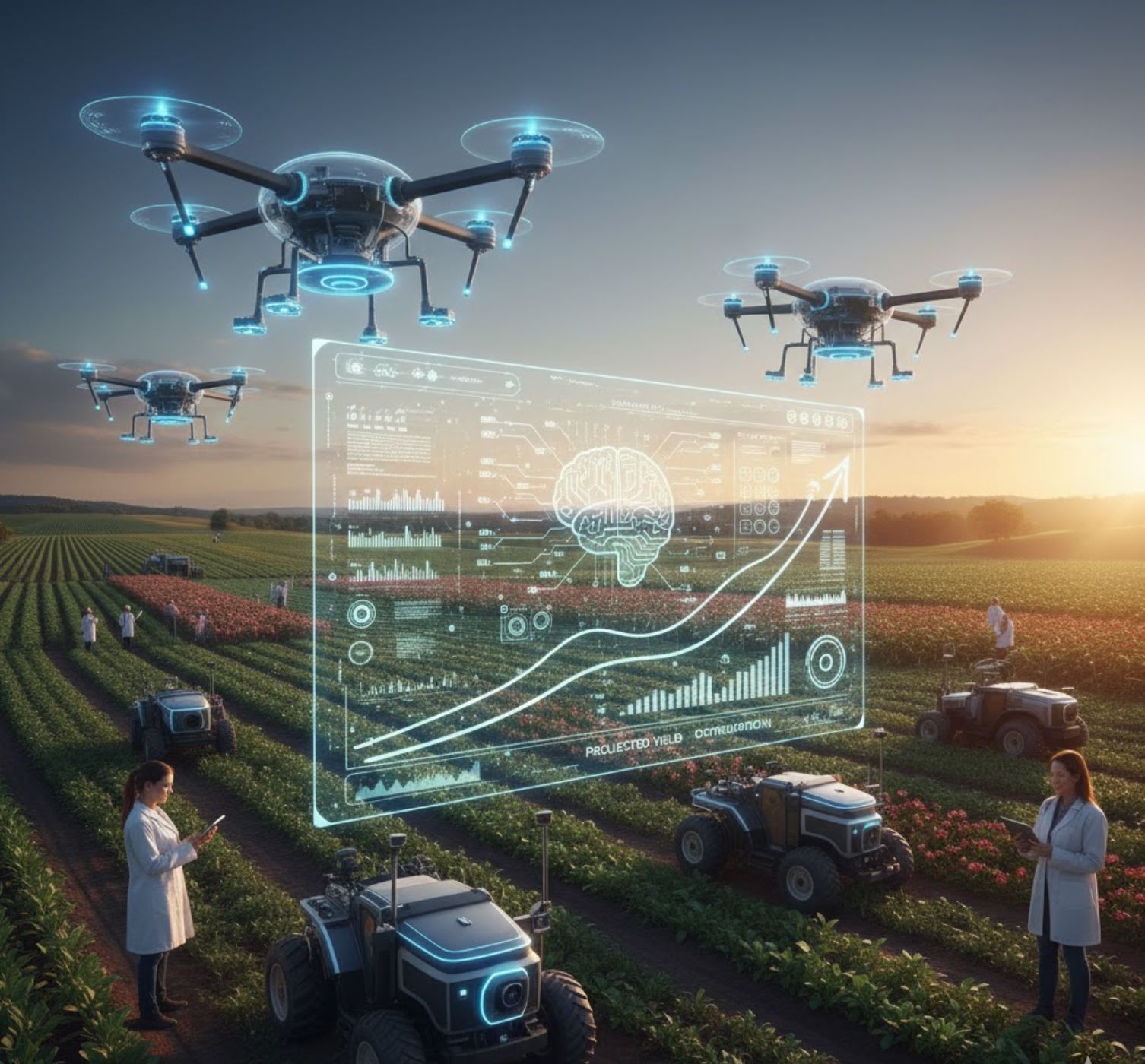
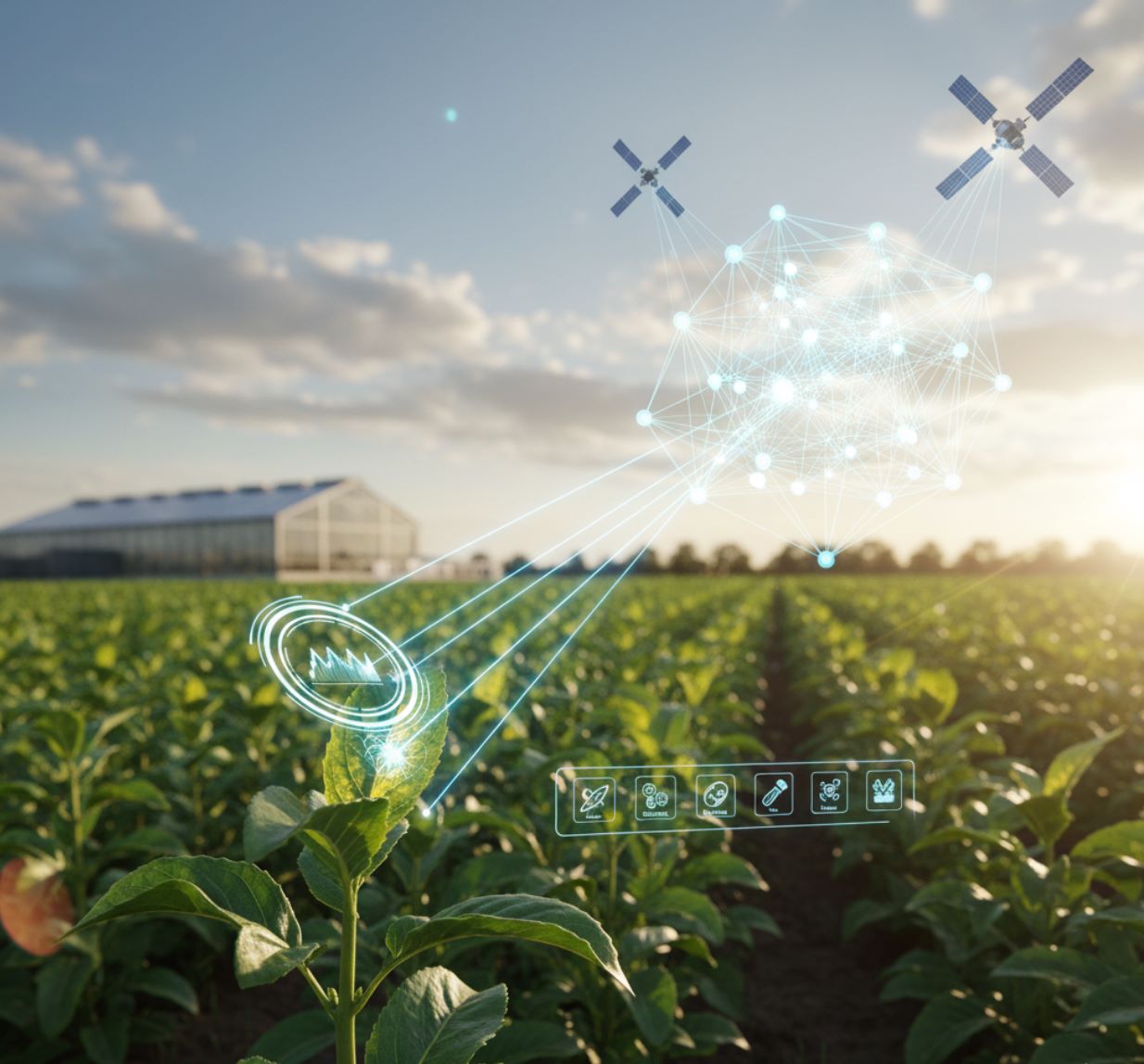
Matalinong pagsasaka (tinatawag ding precision farming) ay gumagamit ng mga sensor, drones, at artificial intelligence (AI) upang gawing mas epektibo at napapanatili ang pagtatanim. Sa isang matalinong bukid, ang datos mula sa mga soil moisture probe, weather station, at satellite o drone imagery ay pinapasok sa mga AI algorithm.
Natututo ang mga modelong ito na hulaan ang mga pangangailangan at magmungkahi ng mga aksyon – halimbawa, kung kailan at gaano karami ang dapat diligan, patabunan, o anihin – upang mabawasan ang basura at mapalaki ang kalusugan ng pananim.
Ang pagsasama ng AI sa agrikultura ay nagmamarka ng bagong panahon ng katumpakan at kahusayan, na nagpapahintulot ng mga gawain tulad ng awtomatikong pagtuklas ng sakit at pagtataya ng ani na dati ay hindi posible.
— Agricultural Technology Review
Sa pamamagitan ng pagsusuri ng mga komplikadong pattern sa datos ng bukid, mapapabilis at mapapahusay ng AI ang paggawa ng desisyon, na nagreresulta sa mas mataas na ani at mas mababang paggamit ng yaman.
Pangunahing Aplikasyon ng AI sa Pagsasaka
Ginagamit na ang AI sa maraming bahagi ng agrikultura. Ang mga magsasaka at kumpanya ng agri-tech ay naglalagay ng machine learning at computer vision sa mga pangunahing aplikasyon na ito:
Tumpak na Patubig at Pamamahala ng Tubig
Pagsubaybay sa Kalusugan ng Pananim at Pagtuklas ng Sakit
Kontrol sa Peste at Pamamahala ng Damo
Pagtataya ng Ani at Paglago
Pamamahala ng Lupa at Nutrisyon
Pagsubaybay sa Mga Alagang Hayop
Supply Chain at Traceability
Pumasok na rin ang AI at blockchain sa mga supply chain. Kayang subaybayan ng mga intelihenteng sistema ang pagkain mula bukid hanggang mesa, na tinitiyak ang pinagmulan at kalidad. Halimbawa, ang mga rekord sa blockchain at AI-driven analytics ay maaaring magpatunay ng organikong produkto o mabilis na matukoy ang mga isyu sa kaligtasan ng pagkain, na nagpapataas ng transparency at tiwala ng mamimili.
Sa pamamagitan ng mga aplikasyon na ito, ginagawang data-driven ang mga tradisyunal na bukid. Pinagsasama nito ang Internet of Things (IoT) devices (tulad ng mga sensor at drone) sa cloud-based analytics at on-farm computing upang makabuo ng isang matalinong ecosystem ng pagsasaka.

Paano Gumagana ang AI sa Bukid
Nakasalalay ang matalinong pagsasaka sa iba't ibang teknolohiya na nagtutulungan. Narito ang mga pangunahing bahagi na nagpapatakbo ng AI-driven na pagtatanim:
IoT Sensors at Pagkolekta ng Datos
Nilalagyan ang mga bukid ng soil moisture sensors, weather stations, kamera, satellite links, at iba pa. Kinokolekta ng mga aparatong ito ang tuloy-tuloy na datos mula sa bukid.
- Ang mga sensor ng lupa at tubig ang pundasyon ng IoT-enabled na matalinong pagsasaka
- Mahalagang mga sukat ng moisture, temperatura, pH, at nutrisyon
- Tuloy-tuloy na real-time na pagmamanman sa buong bukid
Drones at Remote Sensing
Ang mga aerial drone at satellite na may mga kamera at multispectral imagers ay kumukuha ng mataas na resolusyon na mga larawan ng mga pananim.
- Pinagdudugtong-dugtong ng AI software ang mga larawan upang subaybayan ang kalusugan ng pananim
- Agad na natutukoy ang mga stressed na halaman o pagdami ng peste sa malawak na lugar
- Ipinapakita ng multispectral imaging ang mga hindi nakikitang stress ng halaman
Mga Algorithm ng Machine Learning
Pinapasok ang datos ng bukid sa mga ML model sa mga server o edge device upang suriin ang mga pattern at gumawa ng mga hula.
- Neural networks at random forests ang naghuhula ng ani at nagsusuri ng sakit
- Ang unsupervised learning ay nakakakita ng mga kakaibang anomaly sa datos ng pananim
- Ang reinforcement learning ay tumutulong sa mga robot na matutunan ang pinakamainam na aksyon sa paglipas ng panahon
Decision Support Systems (DSS)
Ang mga user-friendly na platform at app ay nagsasama ng mga insight ng AI sa mga praktikal na payo para sa mga magsasaka.
- Mga cloud o mobile dashboard na nagtitipon ng datos mula sa sensor at forecast
- Real-time na mga alerto: "Diligan ang Bukid B ngayon" o "Maglagay ng lunas sa Plot 3"
- Madaling gamitin na interface para sa mga magsasaka ng lahat ng antas ng teknikalidad
Edge AI at On-Farm Computing
Ang mga bagong sistema ay nagpoproseso ng datos direkta sa bukid sa halip na ipadala lahat sa cloud.
- Ang on-device AI ay nagsusuri ng mga larawan o datos ng sensor sa real time
- Mahalaga para sa mga bukid na may limitadong koneksyon sa internet
- Binabawasan ang delay at pinapataas ang pagiging maaasahan sa mga rural na lugar
Blockchain at Data Platforms
Ilang inisyatiba ang gumagamit ng blockchain upang ligtas na itala ang datos ng bukid at mga output ng AI.
- Pagmamay-ari ng mga magsasaka ang kanilang datos sa pamamagitan ng mga tamper-proof ledger
- Tinitiyak na transparent ang mga rekomendasyon ng AI
- Mapagkakatiwalaang nagpapatunay ng mga produkto tulad ng mga organic label

Mga Benepisyo ng AI sa Agrikultura
Ang pagdadala ng AI sa pagtatanim ay nag-aalok ng mga makabuluhang benepisyo sa produktibidad, pagpapanatili, at katatagan:
Mas Mataas na Ani, Mas Mababang Gastos
Pagpapanatili ng Kapaligiran
Katatagan sa Klima
Mga Desisyong Batay sa Datos
Ekonomiya ng Sukatan
Real-Time na Pag-optimize
Maaaring bawasan ng AI-powered advisory services ang gastos sa extension mula sa humigit-kumulang $30 hanggang $0.30 bawat magsasaka

Mga Pandaigdigang Uso at Inisyatiba
Ang AI-driven na agrikultura ay mabilis na umuunlad sa buong mundo. Malalaking organisasyon at mga gobyerno ay malaki ang inilalagay na puhunan sa mga teknolohiya ng matalinong pagsasaka:
United Nations / FAO
Ginawang pangunahing estratehiya ng UN Food and Agriculture Organization (FAO) ang AI para sa digital agriculture. Gumagawa ang FAO ng global agrifood language model at nakikipagtulungan upang maglunsad ng AI advisory services sa Ethiopia at Mozambique.
- Pagbuo ng global knowledge AI para sa mga magsasaka at mga gumagawa ng patakaran
- Digital na mga kasangkapan (sensor + IoT) para sa mas tumpak na pagsasaka
- Pinapalakas ng AI ang mga sistema sa pamamagitan ng pagtuklas ng mga nakatagong pattern at paghula ng mga krisis
- Nakatuon sa paggawa ng teknolohiya na abot-kaya sa mga umuunlad na bansa
Estados Unidos / NASA
Gumagamit ang NASA's Harvest consortium ng satellite data na pinagsama sa AI upang suportahan ang agrikultura sa buong mundo. Ipinapakita ng mga pagsisikap na ito kung paano makakatulong ang data mula sa kalawakan at AI sa mga magsasaka sa lupa na gumawa ng mas mahusay na desisyon.
- AI-powered na pagtataya ng ani mula sa satellite imagery
- Mga sistema ng maagang babala sa tagtuyot
- Mga kasangkapan sa pamamahala ng pataba na sumusuri sa spectral signature ng halaman
- Pag-optimize ng paggamit ng nitrogen gamit ang advanced analytics
Tsina
Mabilis na inilalagay ng Tsina ang AI at big data sa pagsasaka. Ang kanilang "Smart Agriculture Action Plan (2024–2028)" ay nagpo-promote ng mga drone at AI sensor sa mga rural na lugar, na ginagawa itong nangungunang tagapagpatupad ng matalinong pagsasaka sa malawakang sukat.
- Mga fleet ng drone na nagsusuri ng mga pananim sa malalawak na lugar ng agrikultura
- Awtomatikong mga istasyon ng patubig na may AI optimization
- Traceability gamit ang blockchain (halimbawa, pagsubaybay sa mangga: 6 na araw → 2 segundo)
- Malalaking kumpanya ng teknolohiya (Alibaba, JD.com) na nagsasama ng AI para sa supply chain
Europa at OECD
Binibigyang-diin ng OECD ang AI bilang bahagi ng "data-driven innovations na nagbabago sa mga sistema ng pagkain." Ang mga programa sa pananaliksik ng EU at mga startup hub ay nagtutulak ng mga tool sa matalinong pagsasaka, mula sa autonomous tractors hanggang sa AI crop disease apps.
- Precision agriculture para sa mga inisyatiba sa pagpapanatili
- Innovation hubs sa Netherlands at Germany
- AI for Agriculture working group sa pamamahala at pagbabahagi ng datos
- Nakatuon sa mga etikal na pamantayan at interoperability
International AI for Good
Aktibong tinatalakay sa mga kaganapan tulad ng ITU AI for Good Summit (kasama ang UN Food Programme at FAO) ang mga pamantayan sa matalinong pagsasaka, kabilang ang AI interoperability at pagpapalawak para sa mga maliliit na magsasaka.
- Pandaigdigang dayalogo sa pag-harmonize ng paggamit ng AI sa agrikultura
- Pagtugon sa mga etikal, panlipunan, at teknikal na puwang
- Mga pamantayan para sa AI interoperability sa iba't ibang platform
- Nakatuon sa inklusibong access para sa mga maliliit na magsasaka

Mga Hamon at Pagsasaalang-alang
Bagaman maraming pangako ang AI, may mga mahahalagang hadlang ang matalinong pagsasaka na kailangang tugunan para sa malawakang paggamit:
Access at Kalidad ng Datos
Kailangan ng AI ng maraming mataas na kalidad na datos upang gumana nang epektibo. Mahirap mangolekta ng tumpak na datos mula sa mga sensor sa bukid – maaaring masira ang kagamitan o magbigay ng maingay na readings sa matinding panahon. Maraming mga bukid sa kanayunan ang walang maaasahang internet o kuryente para sa mga IoT device.
Gastos at Imprastruktura
Mahal ang mga high-tech na sensor, drone, at AI platform. Maaaring hindi kayanin ito ng mga maliliit na magsasaka sa mga umuunlad na rehiyon. Malaki ang gastos sa imprastruktura at hindi abot-kaya sa ekonomiya, na nananatiling malaking hadlang.
- Kailangang may mga subsidiya at programa ng suporta mula sa gobyerno
- Maaaring magbahagi ng gastos ang mga kooperatiba ng magsasaka
- May mga low-cost open-source na alternatibo na ginagawa
- Mga scalable na solusyon para sa iba't ibang laki ng bukid
Teknikal na Kasanayan
Kinakailangan ng pagsasanay upang magamit ang mga AI tool at maintindihan ang kanilang mga payo. Maaaring kulang ang mga magsasaka sa digital skills o tiwala sa mga makina. Ang mga biased na algorithm na sinanay gamit ang datos mula sa malalaking bukid ay maaaring magpahina sa mga maliliit na magsasaka.
Interoperability at Pamantayan
Sa kasalukuyan, maraming smart-farm device ang gumagamit ng proprietary platform. Pinipigilan nito ang mga bukid na pagsamahin ang iba't ibang kasangkapan. Naniniwala ang mga eksperto na kailangan ng open standards at vendor-neutral na sistema upang maiwasan ang lock-in.
Ang mga grupo ng pamantayan (tulad ng ITU/FAO Focus Group on AI for Digital Agriculture) ay gumagawa ng mga gabay upang ang mga sensor at datos mula sa iba't ibang gumawa ay magamit nang magkakasama nang maayos.
Mga Etikal at Seguridad na Isyu
Ang pagsentro ng datos ng bukid ay nagdudulot ng mga isyu sa privacy. Maaaring kontrolin ng malalaking agribusiness ang mga serbisyo ng AI at pagsamantalahan ang datos ng mga magsasaka. Madalas na walang pagmamay-ari ang mga magsasaka sa kanilang sariling datos, na nagdudulot ng panganib ng pagsasamantala o hindi patas na pagpepresyo.
Epekto ng AI sa Kapaligiran
May carbon cost ang AI mismo. Isang query lang sa AI ay maaaring kumonsumo ng mas maraming enerhiya kaysa sa isang normal na paghahanap sa internet. Kailangan ang mga sustainable AI system (energy-efficient na modelo, green data centers), kung hindi ay maaaring mapawalang-saysay ang mga benepisyo sa kapaligiran ng pagsasaka dahil sa pagtaas ng paggamit ng enerhiya.
Ang pagtagumpayan ng mga hamong ito ay mangangailangan ng pagtutulungan ng maraming stakeholder: mga gobyerno, mananaliksik, agribusiness, at mga magsasaka ay kailangang magkaisa. Mahalaga ang inklusibong paggawa ng patakaran upang hindi maiwan ang maliliit na magsasaka.
— OECD Agricultural Policy Report

Hinaharap na Pananaw
Nangangako ang mga umuusbong na teknolohiya na itutulak pa ang matalinong pagsasaka, na lumilikha ng mga bagong posibilidad para sa napapanatili at epektibong pagtatanim:
Pagsasanib ng Edge AI at IoT
Ang mga on-device AI processor ay magiging mas mura, na magpapahintulot sa mga sensor at robot na gumawa ng mga desisyon agad-agad sa lugar. Gagamitin ng mga bukid ang maliliit na AI chip sa mga drone at traktora upang tumugon nang real time nang hindi umaasa sa cloud.
AI-Driven Robotics
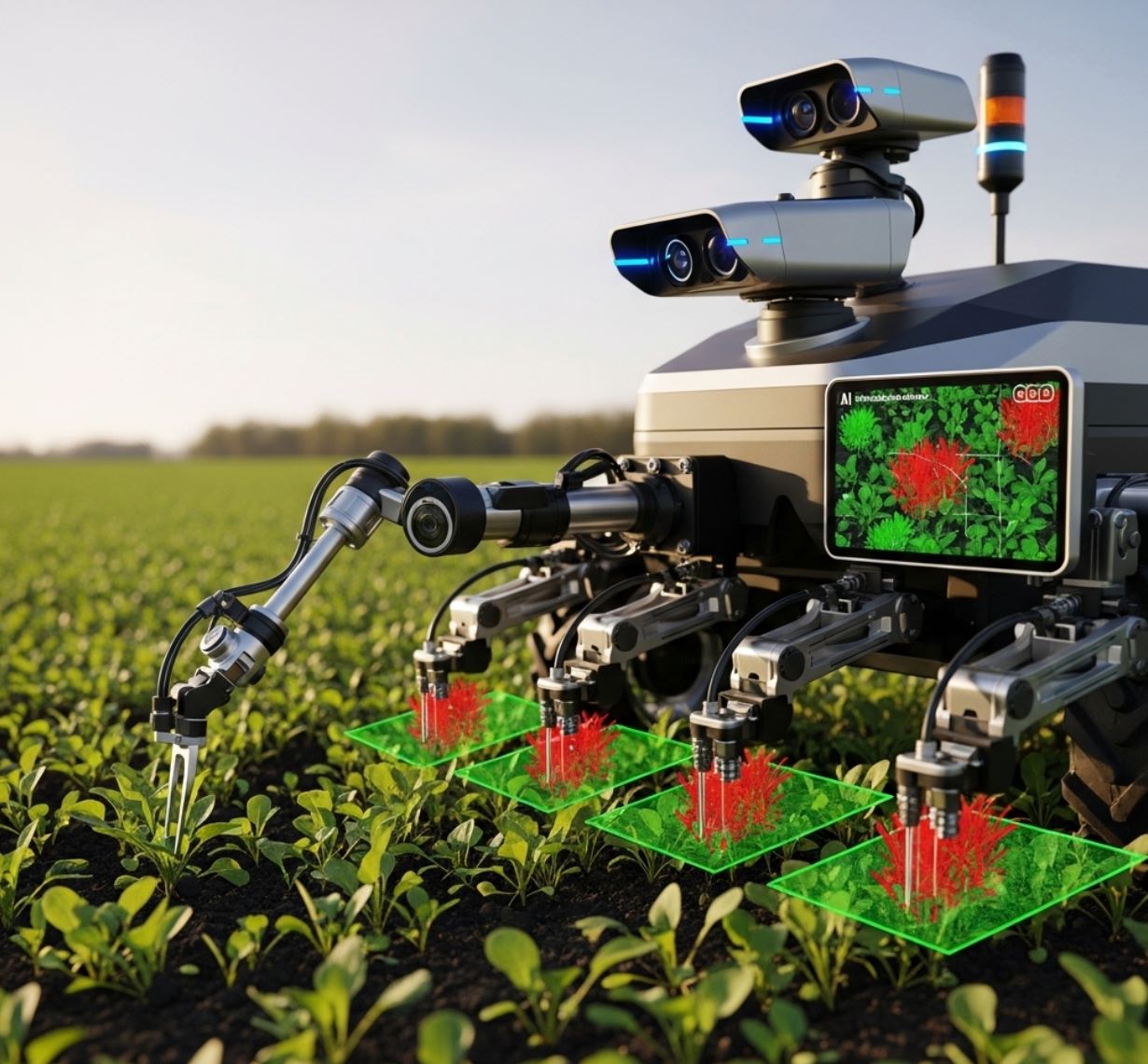
May mga pagsubok na sa mga autonomous na makina sa bukid. Sa hinaharap, maaaring mag-alaga ang mga grupo ng AI-coordinated na robot sa buong bukid, patuloy na natututo mula sa kanilang kapaligiran. Gagawing mas matalino ng reinforcement learning ang mga ito sa mga gawain tulad ng pagtukoy ng hinog na prutas o pag-optimize ng mga pattern ng pagtatanim.
Generative AI at Agronomy
Ang mga malalaking language model na iniangkop sa agrikultura ay maaaring magbigay ng payo sa mga magsasaka sa maraming wika, sumagot sa mga tanong tungkol sa pinakamahusay na mga kasanayan, at kahit magdisenyo ng mga bagong uri ng binhi gamit ang computational breeding. Ginagamit din ang AI upang bumuo ng mga alternatibong protina, na nagpapakita ng lawak ng teknolohiya lampas sa bukid.
Matalinong Pagsasaka para sa Klima
Mas lalong tututok ang AI sa katatagan sa klima. Maaaring mag-simulate ang mga advanced forecasting model ng dose-dosenang senaryo ng klima at magrekomenda ng mga pananim o petsa ng pagtatanim. Ang pagsasama ng AI at blockchain ay maaari ring magbigay-daan sa pagsubaybay ng carbon credit para sa mga regenerative na gawain.
Pandaigdigang Kooperasyon
Palalawakin ang mga internasyonal na pagsisikap. Ang planong "Agrifood Systems Technology and Innovation Outlook" ng FAO (2025) ay naglalayong maging pampublikong database ng agri-tech, na tumutulong sa mga bansa na mamuhunan nang matalino. Ang mga programa ng United Nations at mga pribadong alyansa ay nakatuon sa mga napapanatiling sistema ng pagkain gamit ang AI.

Nangungunang AI Tool sa Agrikultura

CropSense
Application Information
| Author / Developer | CipherSense AI |
| Supported Devices | Web-based platform (desktop and mobile browsers) |
| Languages / Regions | English; optimized for African agricultural regions |
| Pricing Model | Free tier with limited features; premium plans for advanced analytics |
General Overview
CropSense is an AI-powered agri-intelligence platform developed by CipherSense AI to revolutionize precision farming across Africa. By combining satellite imagery, Internet of Things (IoT) sensor data, and machine learning algorithms, CropSense provides farmers, agribusinesses, and cooperatives with actionable insights for optimizing crop performance, soil management, and yield forecasting.
The platform empowers users to make informed decisions that boost productivity, reduce environmental impact, and improve overall farm profitability. CropSense is part of Africa's digital agriculture transformation, helping bridge the gap between smallholder farmers and modern technology.
Detailed Introduction
CropSense represents a major leap forward in data-driven agriculture for emerging markets. Built by CipherSense AI, the platform integrates advanced AI models with remote sensing technologies to deliver real-time insights into crop health, soil fertility, and environmental factors.
The platform uses satellite data and localized weather models to monitor conditions across vast agricultural areas, offering early warnings about pests, diseases, and water stress. By translating complex data into easy-to-understand visuals and recommendations, CropSense empowers farmers to take preventive actions, optimize resource use, and ensure sustainable land practices.
Beyond individual farmers, CropSense also serves financial institutions, government agencies, and agribusinesses by providing crop risk assessments and yield analytics that can improve loan decisions, insurance modeling, and supply chain planning. Its scalable design allows organizations to integrate its intelligence via APIs or white-label solutions, making it a key enabler of smart agriculture across Africa.
Key Features
AI-powered health diagnostics through satellite and IoT data for continuous crop surveillance.
Comprehensive insights into soil health, moisture levels, and carbon content for optimal fertilization.
Early detection of pests, diseases, and adverse weather conditions to prevent crop losses.
AI-based yield prediction for better resource planning and harvest optimization.
Visual tools for tracking multiple farms or regions in one unified view.
Seamless integration with third-party agricultural systems and white-label solutions.
Download or Access Link
User Guide
Create an account on the official CropSense website to get started with the platform.
Enter your farm size, location coordinates, and crop type to enable accurate monitoring.
Optionally connect IoT sensors or upload existing farm data to enhance analytics accuracy.
Access real-time maps, crop health analytics, and alerts through your personalized dashboard.
Use AI-generated recommendations for irrigation, fertilization, and pest control strategies.
Track performance and yield over time using comparative analytics and historical data.
Notes & Limitations
- The free version covers limited area monitoring (up to 1 hectare maximum).
- Advanced features such as detailed yield prediction and IoT integration require paid subscription plans.
- Platform accuracy depends on the quality of satellite imagery and available ground data.
- Currently optimized for African regions; global expansion is in progress.
- Mobile app versions are not yet available on Google Play or the App Store.
Frequently Asked Questions
CropSense was developed by CipherSense AI, an African AI and data analytics company focused on smart agriculture solutions.
A free tier is available for basic crop monitoring, while advanced analytics and enterprise features require a paid subscription.
The platform uses a combination of satellite imagery, IoT sensor data, and localized weather data to generate insights.
Yes, CropSense offers API access and white-label options for partners and agribusinesses.
CropSense focuses on local relevance for African farmers, offering AI models calibrated to regional climate and soil conditions.

Plantix
Application Information
| Developer | PEAT GmbH (Progressive Environmental & Agricultural Technologies) |
| Supported Devices | Android and iOS smartphones; web browser access |
| Languages | 18+ languages; used in over 150 countries worldwide |
| Pricing | Free to use; optional paid enterprise API integrations |
What is Plantix?
Plantix is an AI-powered agricultural app developed by PEAT GmbH that helps farmers and agronomists identify plant diseases, pests, and nutrient deficiencies instantly using smartphone images. Often called a "crop doctor," Plantix uses machine learning and an extensive image database to deliver accurate diagnoses and actionable solutions. With millions of users worldwide, it empowers farmers to protect crops, increase yields, and adopt sustainable farming practices—all from their mobile device.
How Plantix Transforms Digital Agriculture
Plantix has become one of the world's leading mobile tools for precision agriculture and digital plant health management. Created by PEAT GmbH, the app harnesses artificial intelligence and image recognition to detect over 400 plant issues across 30+ major crops, including maize, wheat, rice, and vegetables.
The process is simple: users photograph an affected plant, and within seconds, Plantix analyzes the image using its AI model trained on millions of agricultural photos. The app identifies potential diseases or deficiencies, offers scientifically validated solutions, and provides localized product recommendations for treatment.
Beyond diagnostics, Plantix connects users to an interactive farmer community, enabling peer-to-peer support and expert guidance. The "Plantix Vision API" extends its capabilities to agribusinesses and research institutions, integrating AI plant recognition into broader agricultural platforms.
Its mission is to make precision farming accessible to everyone—particularly smallholder farmers—by combining cutting-edge technology with community-based knowledge exchange.

Key Features
AI image recognition detects plant diseases, pests, and nutrient deficiencies in seconds.
Practical guidance on treatment, fertilization, irrigation, and preventive care strategies.
Share photos, ask questions, and get advice from global agricultural experts and farmers.
Tailored solutions based on crop type, region, and local product availability.
Plantix Vision API for integrating AI diagnostics into third-party agricultural systems.
Download or Access Link
How to Use Plantix
Get the Plantix app from Google Play or the Apple App Store on your smartphone.
Sign up to save diagnostic data and join the global Plantix farming community.
Take a clear photo of the affected plant leaf using your smartphone camera.
The AI analyzes your image and identifies the issue with suggested treatments.
Review recommendations on fertilizers, preventive care, and best agricultural practices.
Connect with other farmers to share experiences and discuss plant care strategies.
Important Notes & Limitations
- Diagnostic accuracy depends on image quality—ensure good lighting and focus for best results
- Some rare crop types or local plant diseases may not yet be included in the AI database
- Internet connection required for real-time image analysis and community interactions
- Product recommendations vary by region based on local availability
Frequently Asked Questions
Plantix was developed by PEAT GmbH, a German agri-tech company specializing in AI solutions for sustainable agriculture.
It uses artificial intelligence and image recognition trained on millions of photos to analyze plant images and detect disease symptoms accurately.
Yes, Plantix offers a free app for farmers. Enterprise users or partners can access paid API solutions for integration into their systems.
The app supports more than 30 major crops, including rice, maize, wheat, tomato, soybean, and various vegetables.
Some features, like viewing past reports, are available offline, but diagnosis and AI processing require an internet connection.
Plantix is available on the Google Play Store and Apple App Store or visit Website.

CropGen
Application Information
| Author / Developer | LeanCrop AgriTech Pvt. Ltd. |
| Supported Devices | Web platform, Android, and iOS |
| Languages / Countries | English; primarily available in India and global agricultural markets |
| Pricing Model | Free to download with paid professional plans for extended features |
What is CropGen?
CropGen is a modern digital farm management platform designed to help farmers, agronomists, and agribusinesses streamline their operations. The tool integrates field mapping, analytics, financial tracking, and team performance monitoring into a unified interface.
With its cloud-based infrastructure and plug-and-play integrations, CropGen enables data-driven decision-making across multiple farms, improving productivity and profitability through real-time insights.
Comprehensive Farm Management Solution
CropGen offers a data-centric approach to agricultural management by combining advanced analytics, geospatial visualization, and operational monitoring. Through its intuitive dashboard, users can track all field activities—from soil conditions to input management—while also gaining visibility over workforce performance.
In the context of digital transformation in agriculture, CropGen stands out as a platform that emphasizes transparency and precision. By consolidating data from various sources—such as drone imagery, IoT sensors, and financial systems—it allows farmers to optimize production cycles and mitigate risks. The platform's modular design and seamless integrations make it adaptable for farms of different sizes, supporting scalability and long-term sustainability.

Key Features
Visualize field layouts and monitor conditions in real time with geospatial precision.
Generate custom reports on yield, finance, and operational performance for data-driven decisions.
Track workforce efficiency and assign field-level responsibilities with ease.
Connect with third-party tools such as QuickBooks and drone imaging systems seamlessly.
Manage farm data anytime via mobile apps or web browsers for maximum flexibility.
Download or Access Link
How to Use CropGen
Sign up via the CropGen website or mobile app to get started with your farm management journey.
Input field boundaries, crop types, and operational schedules to set up your farm profile.
Use map view to track field progress and create notes or flags for important observations.
Access the analytics dashboard for performance metrics and financial reports to optimize operations.
Assign tasks and review progress in real time to ensure efficient workforce management.
Connect external applications such as accounting or drone platforms for richer insights and enhanced functionality.
Important Limitations
- The free version offers limited functionality; full access requires a paid plan
- Mobile versions have limited offline capability
- Some integrations (e.g., drone or accounting tools) may require technical setup
- Public documentation for advanced customization and API access is limited
- Adoption outside India is growing but still regionally focused
Frequently Asked Questions
CropGen is developed by LeanCrop AgriTech Pvt. Ltd., an agricultural technology company focusing on smart farm management solutions.
The app is free to download, but advanced modules and analytics features may require a paid subscription.
CropGen supports Android, iOS, and web browsers, allowing cross-platform accessibility.
The platform integrates with accounting systems like QuickBooks and supports drone imagery for detailed field monitoring.
CropGen is ideal for farmers, agribusinesses, cooperatives, and consultants managing large or distributed farm operations.
Yes, CropGen is accessible globally, though its main user base and language support are centered in India and English-speaking regions.

xarvio FIELD MANAGER (BASF)
Application Information
| Author / Developer | BASF Digital Farming GmbH |
| Supported Devices | Web, Android, and iOS |
| Languages / Countries | Available in over 20 languages; supported in 40+ countries across Europe, North America, and other global markets |
| Pricing Model | Free to download with paid premium features depending on region and functionality |
General Overview
xarvio FIELD MANAGER, developed by BASF Digital Farming, is an advanced precision agriculture platform that empowers farmers to make smarter, data-driven crop management decisions.
By combining satellite imagery, agronomic models, and localized weather data, the app delivers field-specific insights on crop health, disease risks, and optimal input timing.
The platform enhances productivity, reduces waste, and optimizes sustainability, making it one of the most trusted digital solutions for modern farming worldwide.
Detailed Introduction
xarvio FIELD MANAGER is part of BASF's digital agriculture ecosystem, designed to transform how farmers plan and manage their fields. The platform leverages artificial intelligence and agronomic algorithms to analyze satellite images, weather conditions, and soil health, generating recommendations tailored to each field zone.
For precision agriculture applications, xarvio FIELD MANAGER exemplifies how technology bridges the gap between data analytics and real-world crop management.
The app's precision farming approach ensures that every decision—from fertilization to disease prevention—is backed by data, leading to higher yields and lower environmental impact.
Additionally, FIELD MANAGER integrates seamlessly with other BASF tools and third-party agricultural software, allowing for a connected and transparent farm management experience.

Key Features
Predicts disease risks using satellite imagery and advanced agronomic models for proactive crop protection.
Recommends the optimal time for fungicide and pesticide application based on weather and crop conditions.
Suggests optimal seed varieties and placement strategies for maximum yield potential.
Provides field-specific maps highlighting crop health, growth stages, and input requirements.
Available on both web and mobile apps for real-time monitoring and updates from anywhere.
Download or Access Link
User Guide
Sign up on the xarvio FIELD MANAGER website or mobile app to get started.
Import or draw field boundaries manually or via GPS integration for accurate mapping.
Receive satellite-based analysis and crop health updates tailored to your fields.
Use spray timers and risk alerts to optimize treatment schedules and reduce waste.
Track performance and adapt management strategies throughout the growing season.
Notes and Limitations
- Some features, such as SeedSelect and advanced analytics, may require a paid plan
- Real-time recommendations depend on satellite image quality and local data availability
- Regional differences exist in functionality and crop support
- Internet access is required for most data synchronization features
- Free access plans may have limited analytics depth compared to enterprise versions
Frequently Asked Questions
It was developed by BASF Digital Farming GmbH, a division of BASF SE specializing in agricultural innovation and digital solutions.
Yes, xarvio FIELD MANAGER is free to download, but premium features may require a subscription depending on the region.
The app supports a wide range of crops including wheat, barley, corn, potatoes, and oilseed rape.
Some basic data may be cached, but most functionalities require an active internet connection.
Its integration of AI, real-time weather, and satellite imaging enables precise decision-making, helping farmers reduce costs and increase sustainability.
xarvio FIELD MANAGER is available on the official website, Google Play Store, and Apple App Store.
Konklusyon
Binabago ng AI ang agrikultura sa pamamagitan ng pag-transform ng mga bukid sa high-tech na operasyon. Pinapayagan ng mga modernong smart sensor at AI model ang real-time na pagmamanman ng mga bukid, predictive analytics para sa paglago ng pananim, at awtomatikong paggawa ng desisyon sa mga pangunahing gawain. Kayang magpatubig nang tumpak, magtukoy ng sakit nang maaga, at magpataba nang optimal ng mga magsasaka, na nagreresulta sa mas magagandang ani at mas mababang paggamit ng yaman.
Karaniwang sinusuportahan na ngayon ng mga AI-driven na sistema ang tumpak na patubig, maagang pagtuklas ng sakit, at optimal na pagpapabunga sa mga pananim.
— Agricultural Technology Review
Mga Kasalukuyang Hadlang
- Kakulangan sa konektibidad at imprastruktura
- Mataas na gastos sa pagpapatupad
- Mga isyu sa privacy ng datos
- Kailangan ng pagsasanay para sa mga magsasaka
Daan Pasulong
- Maingat na mga patakaran at pagtutulungan
- Malinaw na regulasyon sa datos
- Pagbuo ng open standards
- Inklusibong mga programa sa inobasyon
Gayunpaman, hindi ito isang silver bullet. Nanatiling totoong hadlang ang mga isyu tulad ng konektibidad, gastos, privacy ng datos, at pagsasanay ng mga magsasaka. Ang pagtugon sa mga ito ay mangangailangan ng maingat na mga patakaran at pagtutulungan. Sa tamang pamamahala (tulad ng malinaw na regulasyon sa datos at open standards), tunay na makakatulong ang AI sa lahat – hindi lamang sa malalaking bukid.
Tulad ng binibigyang-diin ng mga ulat ng FAO at OECD, nakasalalay ang tagumpay sa inklusibo at etikal na inobasyon – na tinitiyak na ang mga tool sa matalinong pagsasaka ay energy-efficient, explainable, at abot-kaya para sa lahat ng magsasaka. Kung magagawa natin ito nang tama, matutulungan ng AI na gawing modernong industriya ang agrikultura na angkop sa mga hamon ng ika-21 siglo.

Comments 0
Leave a Comment
No comments yet. Be the first to comment!